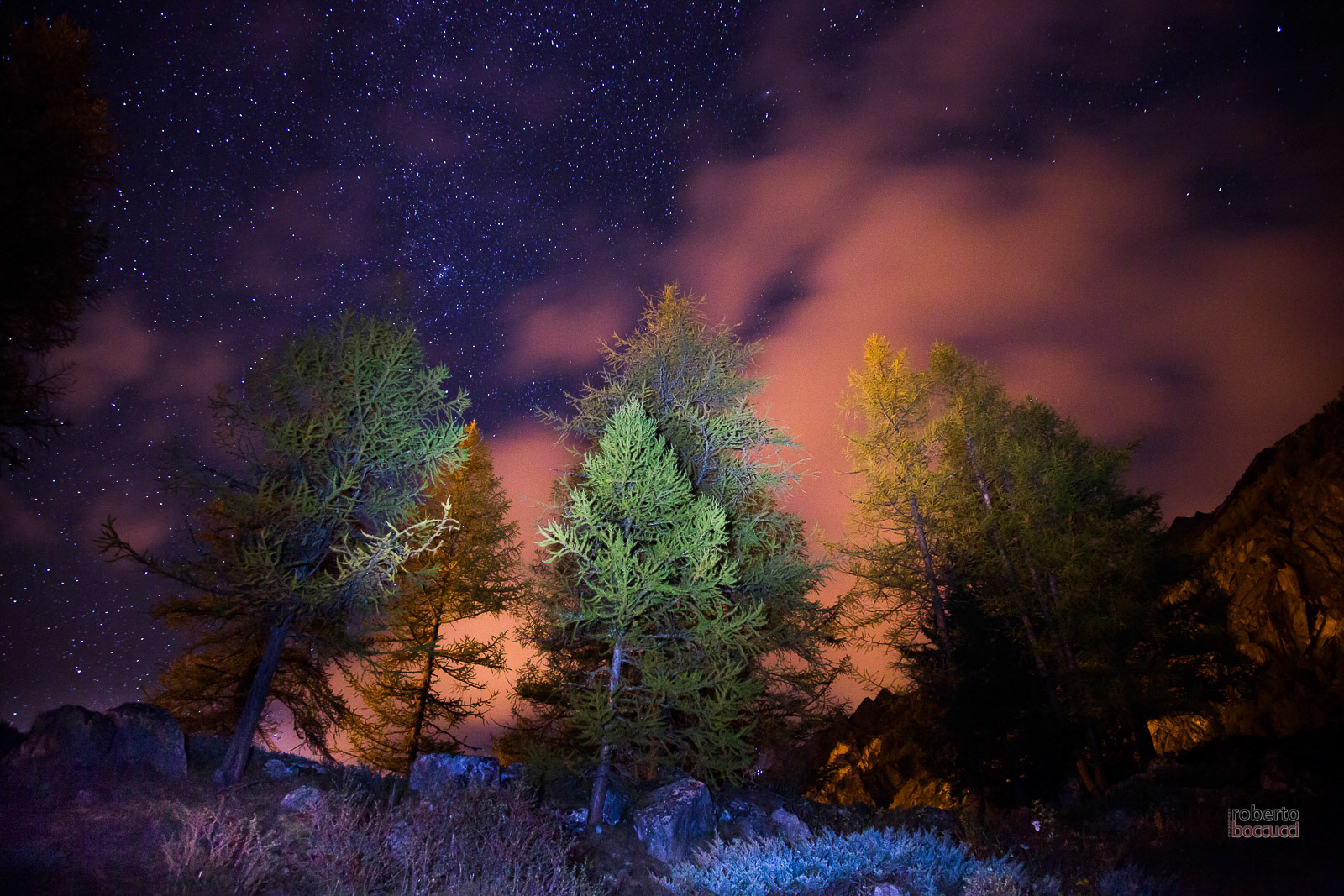
Da quando, oltre 20 anni fa, ho cominciato a percorrere i sentieri del Parco Nazionale del Gran Paradiso, ogni volta che mi accingo ad addentrarmi fra le sue montagne, le sensazioni sono sempre le stesse, animate dalla stessa speranza che la natura riservi a me, quel giorno, uno spettacolo fuori dal comune.
La mattina, quando solo un filo di luce schiarisce i contorni del fondovalle, è il momento giusto per mettere lo zaino in spalla e cominciare l’ascesa.
L’aria è fresca e il semplice respirare, gesto che facciamo migliaia di volte al giorno, qui assurge a un livello superiore acquisendo la dignità che gli spetta. Ogni respiro viene quasi “pensato” per poterne assorbire tutta la sua energia rivitalizzante.
Fanno da contorno inevitabile il profumo dell’erba bagnata dalla rugiada mattutina e il suono dei torrenti che d’estate scorrono vorticosi, alimentati da ghiacciai ormai in declino.
Since I first began walking the trails of the Gran Paradiso National Park more than twenty years ago, every time I prepare to venture into its mountains, the feelings are always the same driven by the same hope that nature will grant me, on that day, an extraordinary spectacle.
In the early morning, when only a thin thread of light softens the outlines of the valley floor, the time has come to shoulder the backpack and begin the ascent.
The air is cool, and the simple act of breathing something we do thousands of times each day here takes on a higher meaning, reclaiming the dignity it deserves. Each breath is almost consciously felt, allowing its full revitalizing energy to be absorbed.
Completing the scene are the unmistakable scent of grass damp with morning dew and the sound of mountain streams that, in summer, rush vigorously onward, fed by glaciers now slowly retreating.
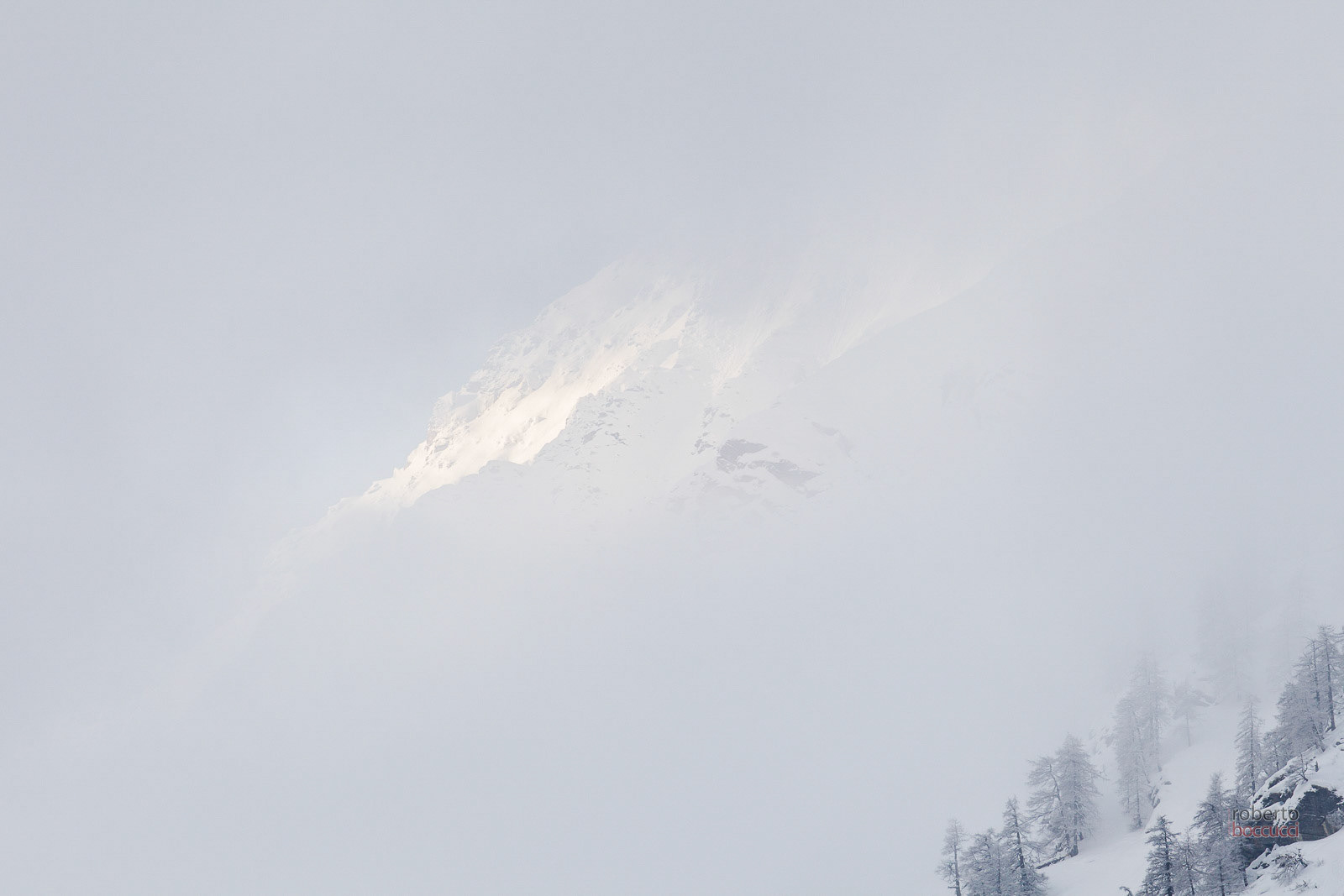

Dopo aver attraversato i prati di fondovalle, si entra nel bosco, ben disposti ad affrontare i ripidi sentieri che portano ai pascoli d‘alta montagna. Alle prime luci dell’alba il bosco è straordinariamente ovattato: persino gli uccelli sembrano rispettare la consegna del silenzio. Si abbandona subito l’idea di arrivare ad una meta prefissata e ci si predispone a quell’incedere lento che solo consente di cogliere tutte quelle piccole grandi sfumature che il Parco è in grado di offrirci.
Ad ogni passo si avvicendano i ricordi di tanti estati passate su questi monti come di quella mattina, sul sentiero che porta ai piani di Levionaz, in cui le sottili falci scure che scorrevano fulminee sopra il filo del manto erboso, tradivano la presenza di due maschi di Fagiani di Monte alla ricerca di una via di fuga; oppure quella volta che poco prima delle Meyes, un Gipeto ha cominciato a veleggiare venti metri sopra la mia testa fendendo con ali ferme un silenzio perfetto; o ancora quando a Plan Borgno, dopo tante ricerche, ho finalmente scorto un ermellino in abito invernale che compariva e scompariva fulmineo fra le rocce.
After crossing the meadows of the valley floor, the path enters the forest, ready to take on the steep trails that lead toward the high-altitude pastures. At the first light of dawn, the forest feels extraordinarily hushed— even the birds seem to respect an unspoken rule of silence. Any notion of reaching a predetermined destination quickly fades, replaced by a slow, deliberate pace, the only way to truly grasp the many subtle yet powerful nuances that the Park has to offer.
With every step, memories surface of countless summers spent in these mountains: that morning on the trail leading to the Levionaz plains, when thin, dark sickle-shaped silhouettes darting just above the grass revealed two male black grouse searching for an escape route; or the time, just before reaching Meyes, when a bearded vulture began to glide barely twenty meters above my head, cutting through a perfect silence with motionless wings; or again at Plan Borgno, when after long searching, I finally caught sight of an ermine in its winter coat, flashing in and out among the rocks with lightning speed.

Alcune volte invece si fanno delle osservazioni che hanno un, seppur minimo, valore etologico. Ai bordi del sentiero che porta al Rifugio Chabod, qualche estate fa fui colto di sorpresa dall‘involo di un pulcino di Fagiano di Monte al quale seguirono, uno alla volta, gli altri sei che componevano la nidiata; infine partì la chioccia che aveva pazientemente atteso che tutti i suoi piccoli fossero in salvo.
Mi ricordo anche di quella volta che ai piani del Nivolet scorsi sulle rocce un ermellino. Si allontanò subito, ma poi notai che faceva capolino tradendo la sua istintiva curiosità. Bastò restare assolutamente fermo e lui fece il resto. Si avvicinò fino a quasi due metri passando di roccia in roccia, assecondando quella sorta di frenesia tanto tipica del suo comportamento.
I ricordi si avvicendano, creano esperienza e hanno il potere di dirigere lo sguardo; intanto i tornanti si succedono finchè, superati i 2000 metri di altitudine, gli alberi cominciano a diradarsi facendo spazio ai pascoli di alta montagna. Lo scenario cambia completamente e la vista può spaziare su orizzonti più ampi. I fischi delle marmotte segnalano la nostra presenza a tutta la colonia. La loro attività è frenetica: sono impegnate a mangiare il più possibile al fine di accumulare il grasso che serve per affrontare il letargo invernale. I piccoli non rinunciano però a recitare il loro ruolo e vicino alla tana i fratelli si affrontano spesso in lotte rituali. L’attenzione della colonia è comunque sempre al massimo in quanto la minaccia dell’aquila su questi monti è tutt’altro che remota.
At times, observations take on a modest yet meaningful ethological value. Along the trail leading to the Chabod Refuge, one summer a few years ago, I was caught off guard by the sudden takeoff of a young black grouse, followed one by one by the other six chicks of the brood; finally, the hen took flight, having patiently waited until all her young were safely away.
I also recall the time on the Nivolet plateau when I spotted an ermine among the rocks. It immediately retreated, but then I noticed it reappearing, betraying its instinctive curiosity. All it took was remaining absolutely still, and it did the rest. It approached to within nearly two meters, moving from rock to rock, driven by that restless energy so characteristic of its behavior.
Memories flow one into another, building experience and guiding the gaze. Meanwhile, the switchbacks continue until, beyond 2,000 meters in elevation, the trees begin to thin out, giving way to high-mountain pastures. The scenery changes completely, and the view opens onto broader horizons. The sharp whistles of marmots announce our presence to the entire colony. Their activity is intense: they feed relentlessly to accumulate the fat reserves needed to face the long winter hibernation. The young, however, never miss their part—near the burrow, siblings often engage in ritualized bouts. Yet the colony’s vigilance remains constant, as the threat posed by eagles in these mountains is anything but remote.
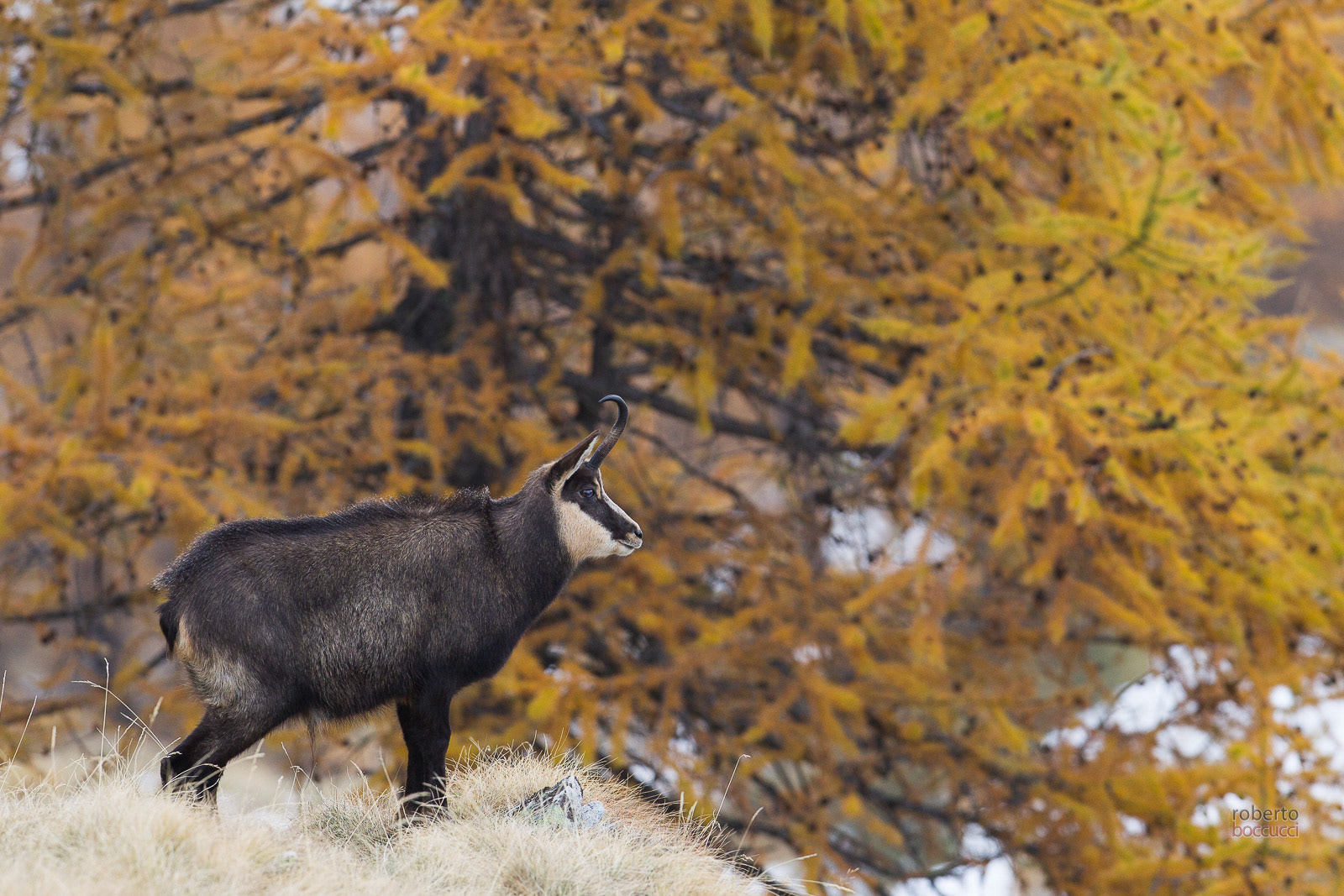
Sui pascoli è frequente anche l’incontro con il camoscio. La distribuzione altimetrica dello stesso varia a seconda delle stagioni e del sesso. In estate le femmine con i piccoli, solitamente all’interno di branchi, tendono ad occupare i pascoli d’alta quota senza un particolare collegamento al territorio; i maschi invece occupano altitudini mediamente più basse e tendono stare nel territorio che in autunno, nel periodo degli amori, difenderanno dalle incursioni dei rivali. In inverno i camosci scelgono altitudini più basse prediligendo i crinali più ripidi, solitamente sgombri dalla neve. In primavera infine non sarà difficile scorgerli anche nel fondovalle dove i pascoli garantiranno la prima erba fresca stagionale.
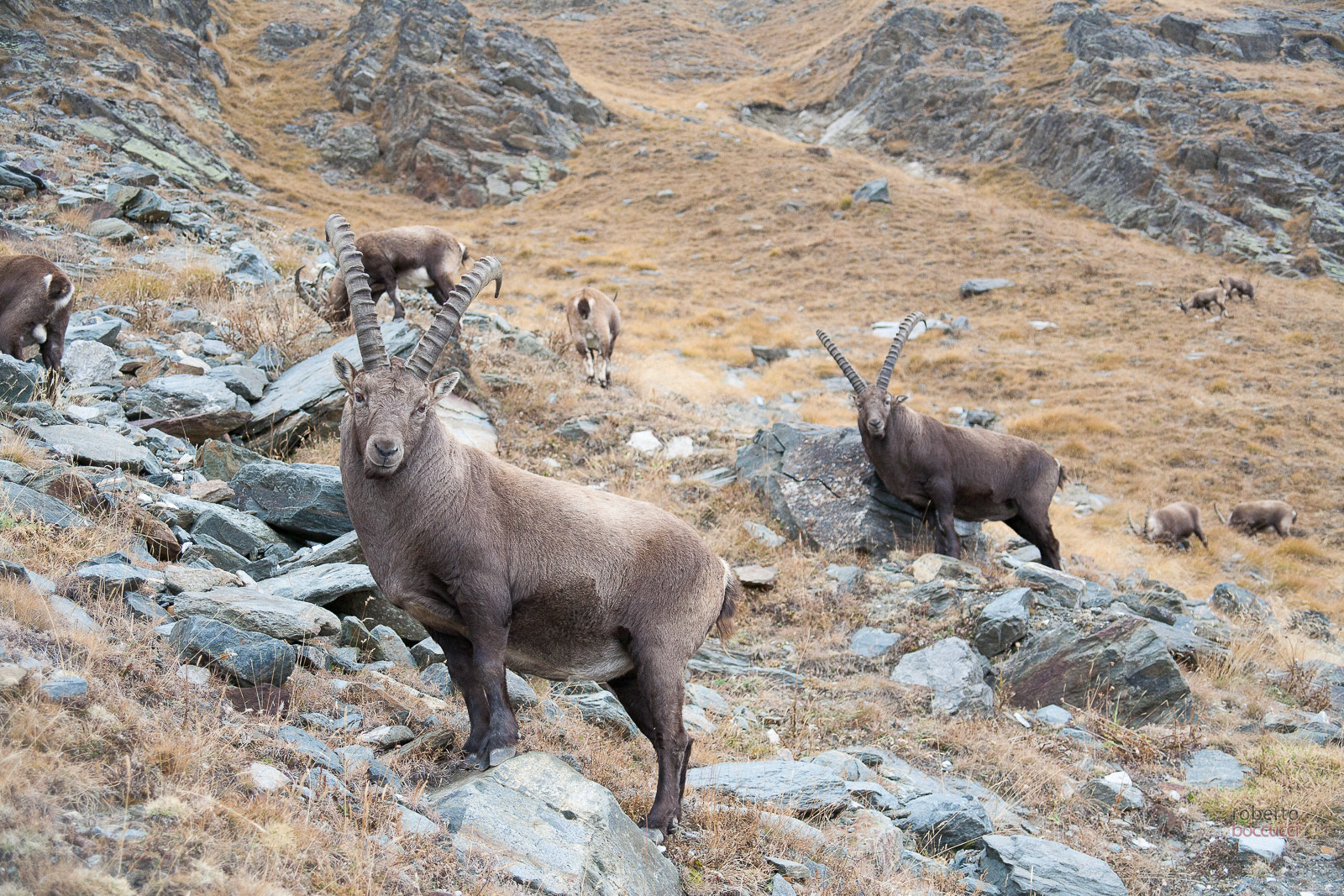
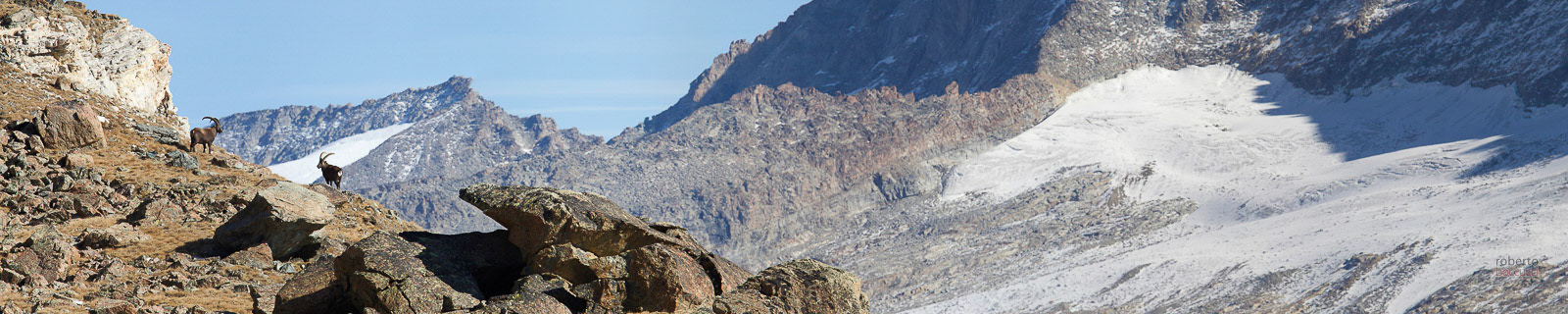
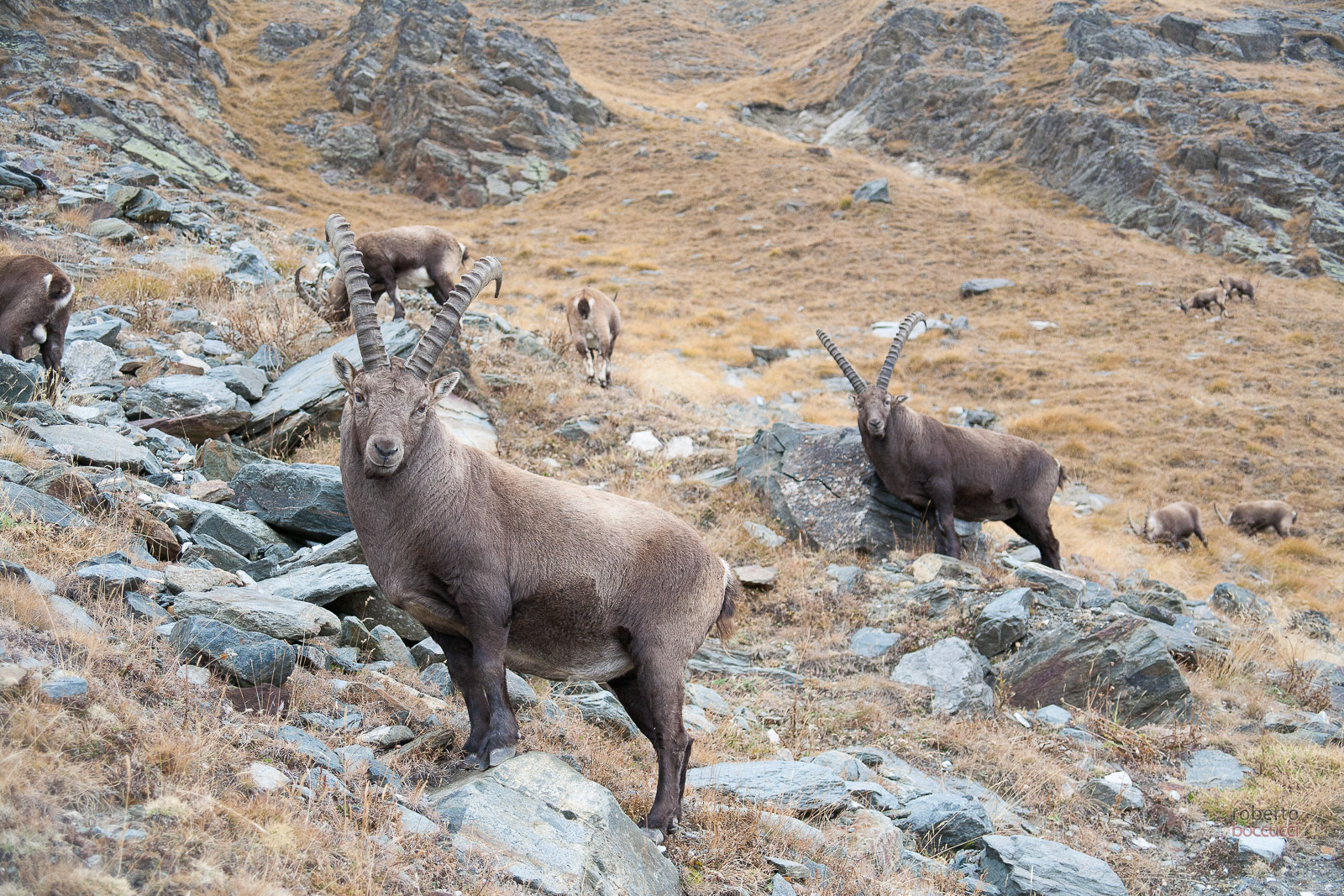
Gli stambecchi invece sono legati ai livelli altimetrici più alti (in estate 2300-3200 metri slm) . Persino in inverno frequentano altitudini spesso notevoli ; infatti anche durante la stagione degli amori, che cade a dicembre, i maschi non difendono un territorio, bensì seguono le femmine in estro e, se non c’è molta neve, le femmine vivono alle medesime altitudini che prediligono d’estate. Comunque è indubbio che mediamente anche lo stambecco sia più facilmente visibile in inverno ad altitudini più basse (1600-2300 metri slm), fino a frequentare il fondovalle durante la primavera. Lo stambecco è il simbolo del Parco Nazionale del Gran Paradiso. E’ infatti grazie all’istituzione della Riserva Reale di Caccia (anno 1836) e poi del Parco (anno 1922) che la specie, ridotta nei primi decenni dell’ottocento a meno di 100 esemplari , ha potuto salvarsi dall’estinzione. Per quanto possa sembrare paradossale, è stata proprio l’istituzione della Riserva reale di caccia che ha garantito la costruzione di una sentieristica , di una rete di rifugi e la preservazione di un ampio territorio da un troppo incisivo intervento umano. Di tutto ciò si sono avvantaggiati proprio i camosci e gli stambecchi che, benchè cacciati dal Re, venivano durante tutto l’anno risparmiati dai valligiani. Diverso il destino della lince per la quale il Re concedette un premio per ogni uccisione, ritenendola dannosa per la selvaggina. Oggi sembra che questo elusivo felino stia lentamente tornando nel Parco sebbene non si possa affermare con sicurezza che si sia stabilita definitivamente o piuttosto sia solo temporaneamente presente. Non vi sono dubbi di alcun tipo invece per quel che concerne la presenza di un altro grande predatore: il lupo.
Encounters with chamois are also common on the alpine pastures. Their altitudinal distribution varies according to season and sex. In summer, females with their young—usually gathered in groups—tend to occupy high-altitude pastures, without a strong attachment to a specific territory. Males, on the other hand, generally remain at slightly lower elevations and tend to stay within areas that they will later defend from rivals during the autumn rut. In winter, chamois move to lower altitudes, favoring steep ridgelines that are often free of snow. In spring, they can also be spotted in the valley floor, where the pastures provide the first fresh grass of the season.
Ibex, by contrast, are closely associated with higher elevations (in summer typically between 2,300 and 3,200 meters above sea level). Even in winter they often frequent considerable altitudes. During the mating season, which takes place in December, males do not defend territories but instead follow receptive females; when snowfall is limited, females remain at roughly the same elevations they prefer in summer. Nevertheless, ibex are on average more easily observed at lower altitudes in winter (around 1,600–2,300 meters), and they may even descend to the valley floor in spring.
The ibex is the symbol of the Gran Paradiso National Park. It is thanks to the establishment of the Royal Hunting Reserve in 1836, and later of the Park itself in 1922, that the species—reduced to fewer than one hundred individuals in the early decades of the nineteenth century—was saved from extinction. Paradoxically, it was precisely the creation of the royal hunting reserve that ensured the development of a network of trails and mountain refuges, as well as the preservation of a vast area from excessive human impact. Chamois and ibex benefited greatly from this protection: although hunted by the King, they were spared throughout the year by local inhabitants.
The fate of the lynx was different. The King offered a bounty for each animal killed, considering it harmful to game. Today, this elusive feline appears to be slowly returning to the Park, although it cannot yet be stated with certainty whether it has become permanently established or is only a transient presence. There is no such doubt, however, regarding the presence of another large predator: the wolf.

In montagna una delle cose che più affascina è il fluire delle stagioni che chiaramente qui si alternano in maniera molto più netta rispetto alle altitudini più basse. La percezione delle stagioni risulta più marcatamente caratterizzata che altrove in relazione ai cicli comportamentali che vanno a contraddistinguere le diverse specie animali. L’autunno è segnato dalla preparazione alla fase del letargo messa in atto dalle marmotte. In ottobre e ancora di più in novembre non è raro assistere alle corse a perdifiato dei camosci che si rincorrono nelle contese che segnano la stagione degli amori. In dicembre è invece il turno degli stambecchi e nei boschi risuona il rumore della cornate sferrate durante i combattimenti fra maschi.
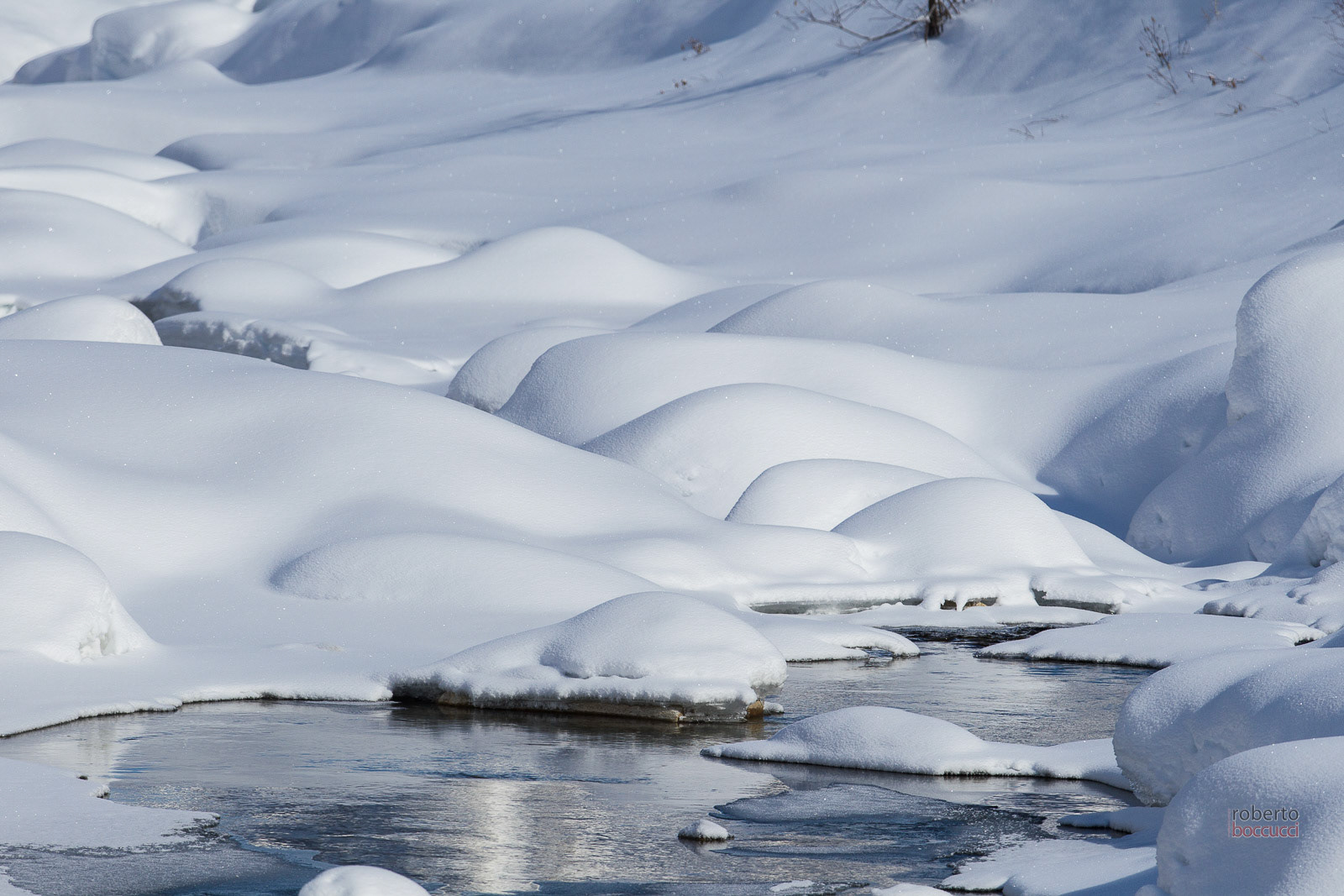
In inverno gli animali del Parco, in condizioni metereologiche particolarmente avverse, subiscono solitamente una dura selezione che colpisce soprattutto gli individui deboli e i più giovani. Stambecchi e camosci sono costretti a frequentare le zone meno innevate come quelle localizzate lungo i pendii scoscesi esposti a sud.
La primavera è il periodo del risveglio e sembra quasi di respirare una sorta di gioiosità. Le marmotte escono dal letargo e i grandi ungulati, ormai al riparo dai rischi dell’inverno, sono intenti a recuperare le forze perdute. Infine l’estate è il periodo in cui avvengono le nascite e in cui gli animali sono impegnati soprattutto ad alimentarsi in modo da affrontare al meglio il prossimo inverno dando inizio ad un ulteriore ciclo.
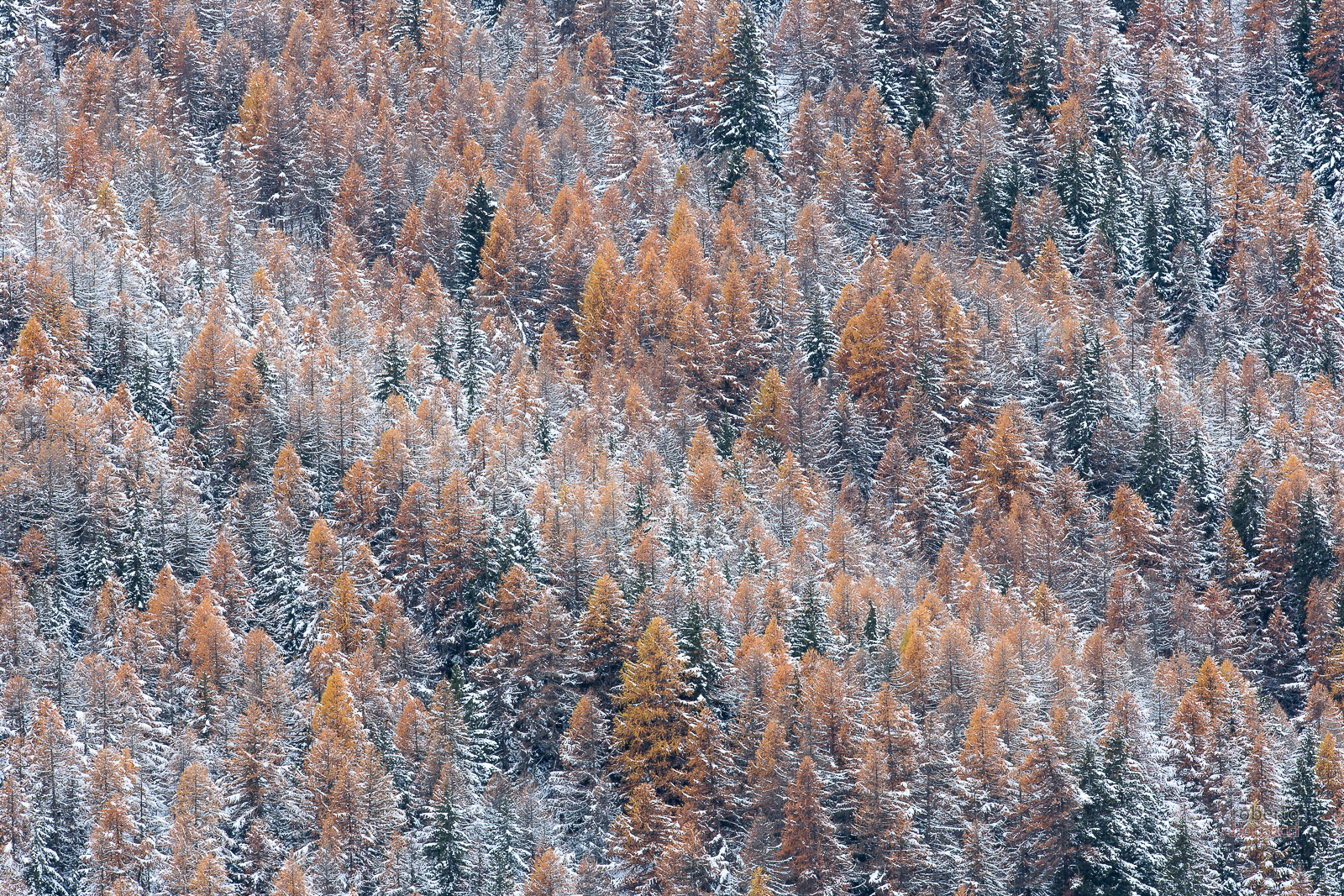
L’alternarsi delle stagioni è segnato da un cambiamento di colori di cui la natura veste queste montagne nei diversi periodi dell’anno. E’ come in un teatro in cui al cambio d’atto cambiano gli scenari che fanno da sfondo alle vicende dei protagonisti.
Roberto Boccucci
In the mountains, one of the most fascinating aspects is the flow of the seasons, which here alternate far more distinctly than at lower elevations. The perception of seasonal change is more strongly defined, closely tied to the behavioral cycles that characterize the different animal species. Autumn is marked by the marmots’ preparation for hibernation. In October, and even more so in November, it is not uncommon to witness the breathless chases of chamois as they pursue one another during the rut. In December, it is the ibex’s turn, and in the forests the clash of horns echoes as males engage in combat.
During winter, under particularly harsh weather conditions, the animals of the Park are subjected to a severe natural selection, affecting above all the weakest individuals and the young. Ibex and chamois are forced to seek out areas with less snow, such as steep, south-facing slopes.
Spring is a time of awakening, almost infused with a sense of joy. Marmots emerge from hibernation, and the large ungulates, now safe from the dangers of winter, focus on regaining their strength. Summer, finally, is the season of births, when animals are primarily engaged in feeding, preparing themselves to face the coming winter and thus begin yet another cycle.
The passing of the seasons is accompanied by a transformation of colors, with nature dressing these mountains differently throughout the year. It is like a theater, where with each change of act the scenery shifts, forming the backdrop to the unfolding stories of its protagonists.
Roberto Boccucci