
E’ ormai buio; con l’ausilio della lampada frontale, mi addentro nel silenzio della taiga svedese. A metà aprile, la neve comincia a sciogliersi liberando dall’oppressione del suo peso i cespugli di erica e gli spugnosi tappeti di muschio; finalmente l’inverno passa la mano e il respiro della primavera sparge prodigiosamente sul bosco tutti i colori del verde.
La neve rimasta è resa compatta dal gelo delle notti boreali e rende il cammino meno faticoso.
Arrivato nel punto prescelto, monto la tenda e mi preparo per la notte nella foresta. Alle 22, puntuali come un orologio, i galli cedroni giungono ai loro posatoi: non li vedo, ma sento un poderoso battito di ali sopra la mia testa: arrivano sempre alla stessa ora e sostano sugli alberi in attesa del giorno dopo. Mi sveglio che è ancora buio, apro la cerniera della tenda di pochi centimetri, quel poco che serve per scorgere due maschi in piena attività a pochi metri dalla mia postazione.
Sono spettatore privilegiato di un rito il cui fascino mi ha attirato fin qui, nel nord della Svezia, a molte migliaia di chilometri da casa. Ogni mattina, alle prime luci dell’alba, negli angoli più remoti del bosco si danno un tacito appuntamento un gruppo di Galli Cedroni o, come anche vengono chiamati, di Urogalli; il posto è sempre quello e il copione si svolge immutabile dall’ultima glaciazione. Un rituale segreto che evoca e rinnova i miti e le leggende della montagna.
It is dark by now, with the help of the frontal lamp I get into the silence of Swedish taiga. It is the middle of April and snow is starting to thaw freeing the heather bushes and the sponge carpets of moss from the oppression of its weight. Winter is over at last and spring paints the wood in all the hues of green.
What is left of snow is made compact by the intense cold of boreal nights and makes it easier to walk. When I get to the chosen spot I set up the tent and get ready to spend a night in the forest.
At 10 o’clock sharp capercaillies get to their perches as regular as clockwork. I cannot see them but I can hear wings flapping vigorously above my head. They always arrive at the same time and perch on the trees to wait for the next day. I wake up when it is still dark, pull the zipper of my tent a little bit down, as much as it is enough to see two males at full activity a few metres away.
I am a privileged spectator of a ritual whose appeal has brought me here, to the North of Sweden, miles away from home .Every morning ,at dawn, a group of capercaillies spontaneously meet in the most retired spot of the wood. The place is always the same and the script has remained unchanged since last glaciation, it is a secret ritual which evokes and renews the myths and legends of the mountain
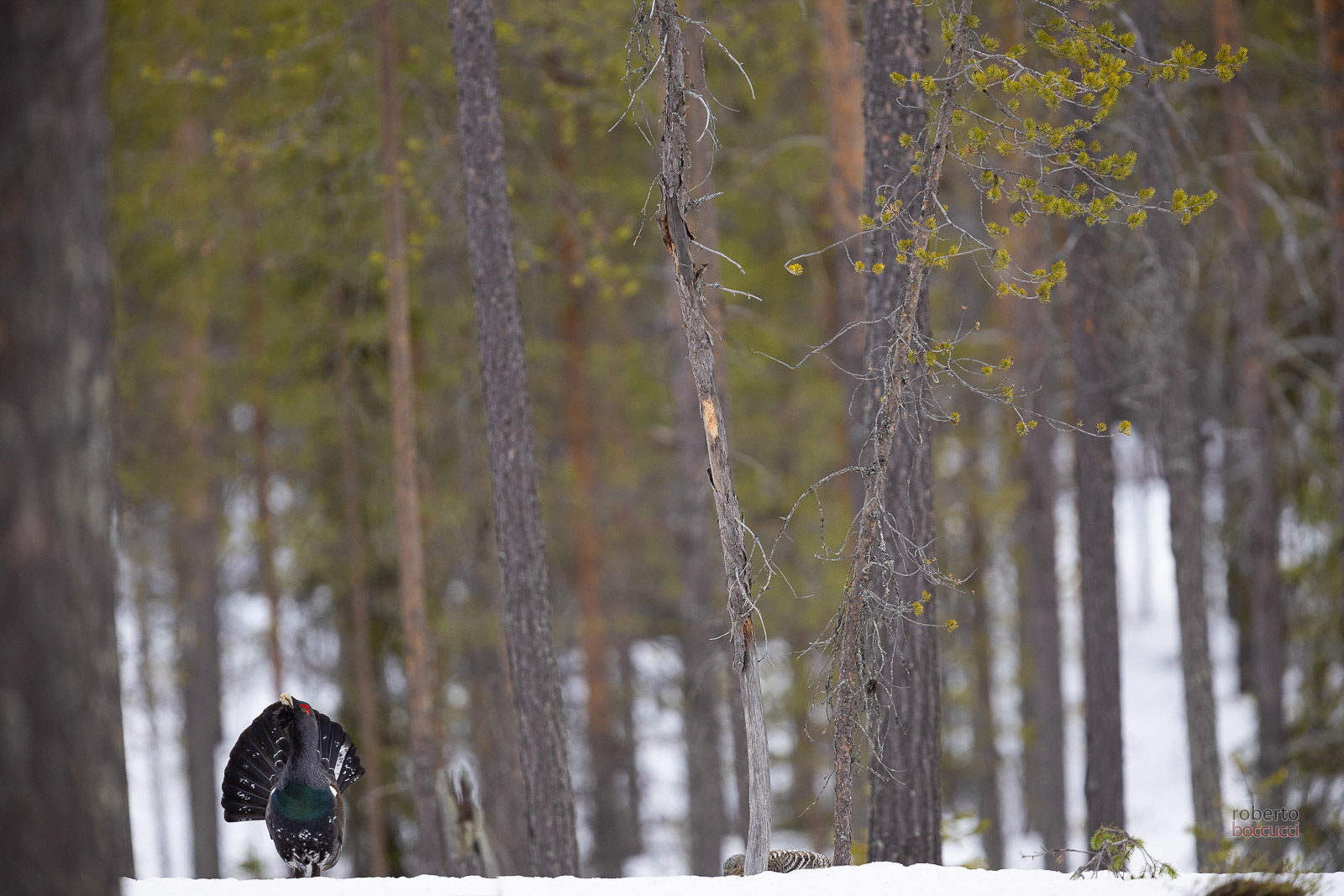
I maschi si muovono veloci nelle tenebre e nel silenzio della foresta, contendendosi il diritto di perpetuarsi in una discendenza ormai sempre più incerta. Il chiarore dell’alba rende, con il passare del tempo, la scena più decifrabile e riesco a vedere un maschio in parata che recita instancabile sempre la stessa strofa. Questo verso, che assomiglia molto a quello prodotto dall’estrazione del tappo di una bottiglia di spumante, risuona in vari punti del lek: stamattina sono tre i maschi che si contendono la scena. La maggior parte della parata si svolge in una luce fioca, dando al fotografo generalmente 45 minuti di luce accettabile durante i quali sperare che la scena “giusta” si svolga proprio di fronte alla sua postazione. Per una buona foto è necessaria molta fortuna: il più delle volte l’opportunità favorevole si profila quando la luce è troppo scarsa o in un luogo nascosto o lontano dal fotografo..Ed infatti poco lontano sento un incredibile frastuono: sono due Urogalli in combattimento, ma purtroppo non riesco a vedere nulla: la posizione non è favorevole e non intendo sporgermi dalla tenda per non disturbarli. Poi, d’improvviso e magicamente, il bosco si riappropria del suo silenzio. Attendo ancora qualche minuto, ma la prima sensazione è quella giusta: i contendenti sono volati via, ma domani, c’è da stare sicuri, riprenderanno possesso del loro territorio e il sipario si riaprirà per una nuova e immutabile rappresentazione.
The males move swiftly in the silence and darkness of the forest, fighting to gain the right to continue to perpetuate their existence through their offspring, something which is becoming more and more difficult. The first light of dawn makes the scene more visible and I am able to see a male on parade reciting the same verse untiringly. This sound, which is similar to the one produced by uncorking a bottle of champagne, re-echoes in many parts of the lek.
This morning there are three males competing to be at the center of the scene. Most of the parade takes place in a very faint light, therefore to carry out my job I can avail of the proper light for taking a photograph only for 45 minutes, as it is usually with photographers provided the scene takes place just in front of the place where they are positioned. To take a good photo a lot o good luck is necessary; most of the time there are favourable opportunities when the light is too faint, in a hidden place or when they are not too near. And, here I am..! Not far from me I hear an incredible noise, there are two capercaillies fighting , but unfortunately I cannot see anything as I am not in a good position and I don’t want to get out of my tent lest I might disturb them; then , suddenly, as by spell the wood turns silent again. I wait a few minutes, but my first impression is the right one : the fighters have flown away.


Il Gallo Cedrone è purtroppo in regresso in tutto il suo areale a causa di molteplici motivazioni legate ai cambiamenti climatici e altresì alla sua scarsa adattabilità rispetto alle variazioni sempre più incisive che interessano il suo ambiente. Quest’ultimo infatti deve rispondere a canoni ben precisi. Innanzitutto il suo home range è pari mediamente a 550 ha (Storch 1995 ); inoltre ha bisogno che i siti di corteggiamento, di nidificazione, di allevamento, di pastura e di svernamento rispondano a ben determinate caratteristiche, soddisfatte generalmente dalla presenza di boschi misti naturali disetanei con piccole radure e ricco sottobosco.
Le conifere in inverno diventano fondamentali in quanto nella cattiva stagione l’unico nutrimento è rappresentato dagli aghi di pino o di abete.
D’estate invece è importante la presenza di un sottobosco ricco di ericacee che, oltre a garantire un’efficace protezione visiva, consenta di accedere ad un nutrimento vario e abbondante.
Tomorrow they will certainly come back to their territory and the curtain will open on a new, unchangeable performance again. Capercaillies are unfortunately getting fewer in all their areas for climatic changes and for their scarce adaptability to the ever- increasing variations affecting their environment. This should have specific characteristics, first of all the average of its home range must be 550 ha (Storch 1995) ,then they need sites for courting, nidification ,breeding pasture and wintering where there are generally mixed natural woods with small hidden spots and a rich under-wood.
Coniferae become fundamental in winter as fir and pine-needles are the only food in this season, while the presence of a thick under-wood of heath bushes is very important in summer as it can provide both an effective visual protection and varied and abundant food. I devoted four of the the six days I spent in Sweden to capercaillies and two to black grouse cocks . Their environments are completely different. The arenas of black grouse cocks tend to be completely open sites, sometimes even frozen lakes, because there is more light and the number of specimens in the arena is much higher, in fact, there were forty malesin the lek where I used to go.

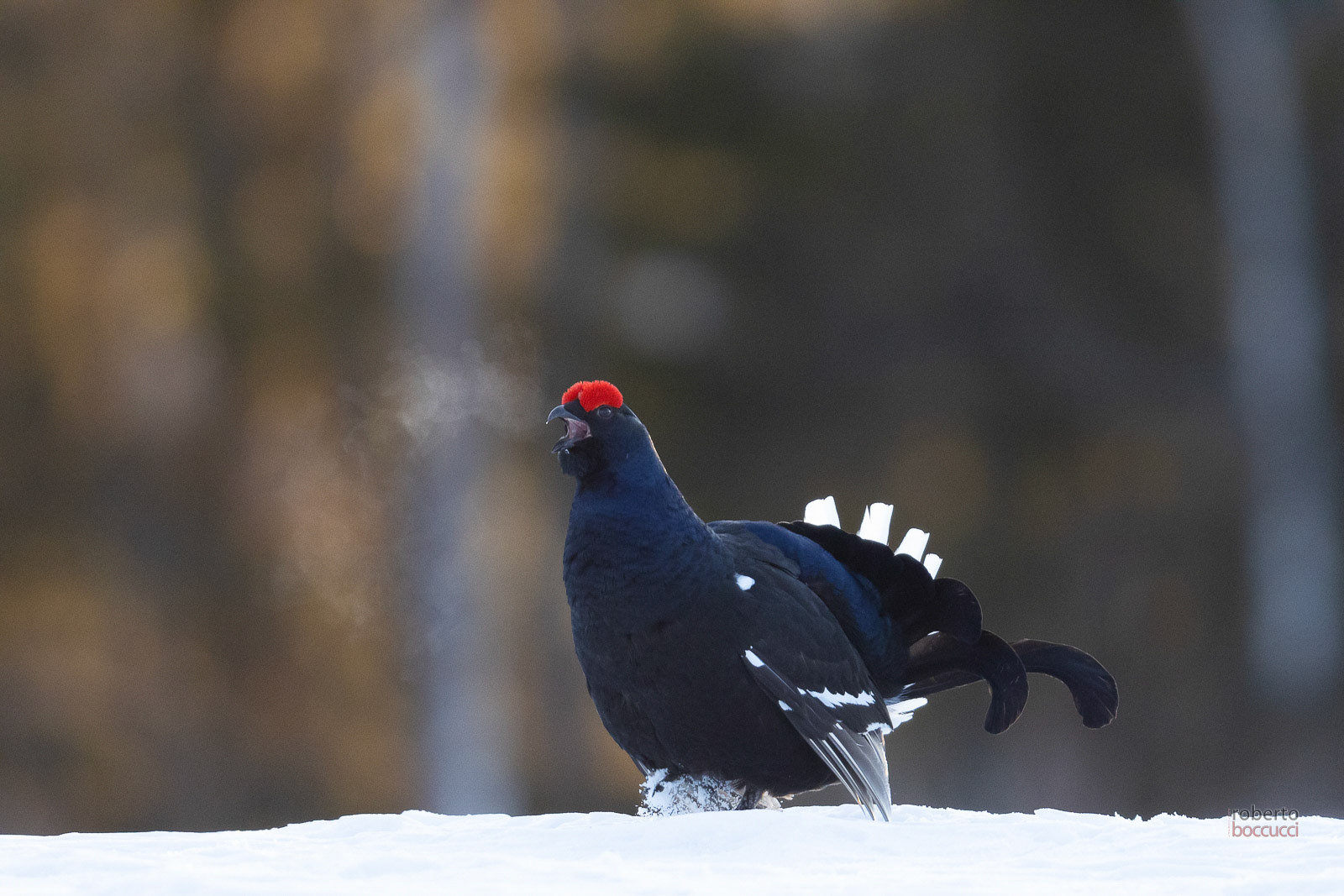
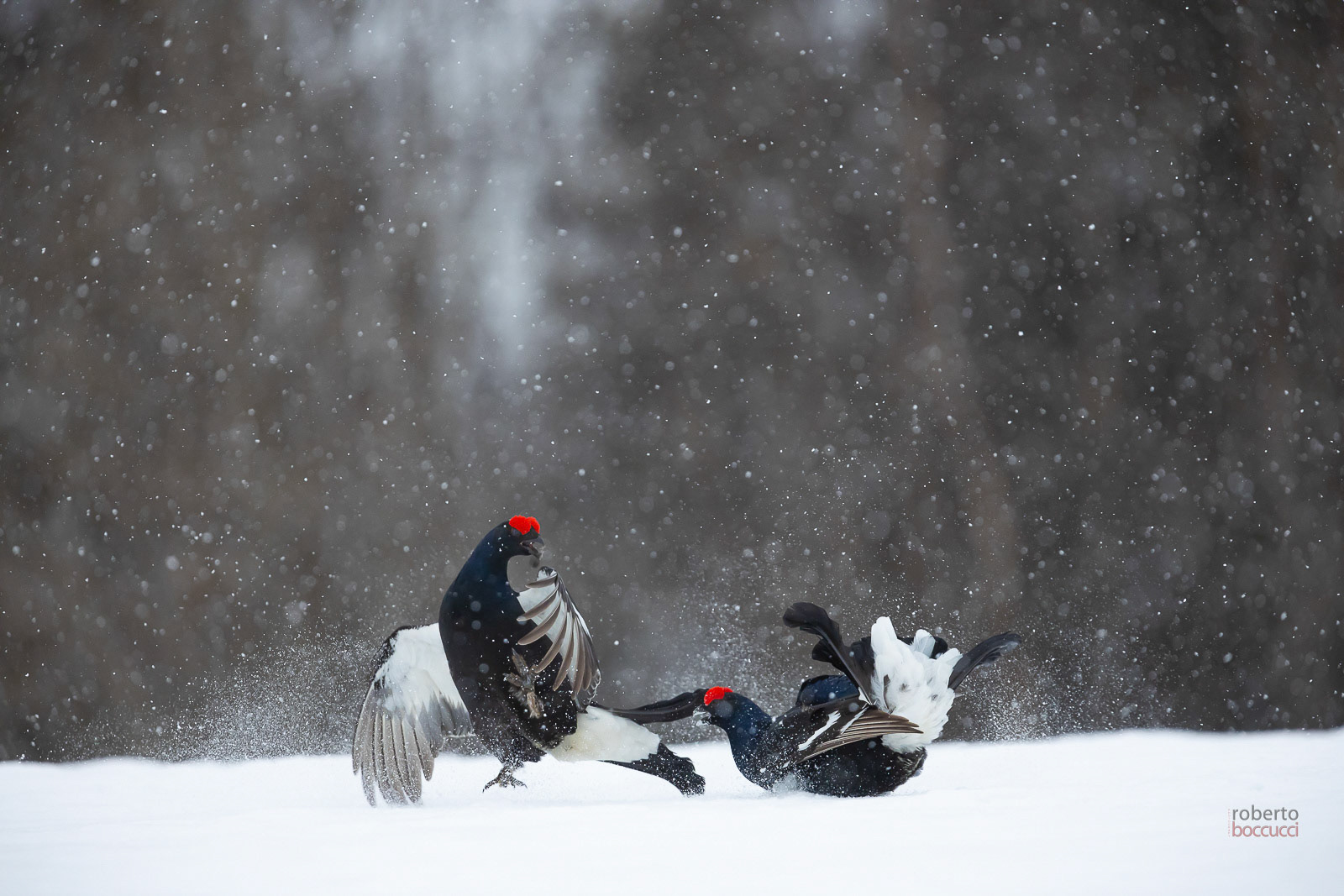
Durante i sei giorni passati in Svezia, ne ho dedicati quattro al Gallo Cedrone e due al Gallo Forcello. Le condizioni sono tuttavia completamente diverse. Innanzitutto le arene dei Galli Forcelli tendono ad essere localizzate in luoghi completamente aperti e spesso anche i laghi ghiacciati sono utilizzati allo scopo. Generalmente i problemi di carenza di luce sono molto più limitati e inoltre il numero degli esemplari presenti nell’arena è enormemente più alto.
Nel lek da me frequentato erano presenti mediamente 40 maschi. Anche le abitudini sono diverse: i galli forcelli arrivano nel lek il pomeriggio, quando la luce, radente e ancora forte, concede buone opportunità fotografiche. Al calare della notte gli uccelli si allontanano per tornare fra l’una e le due di notte. Non c’è pericolo di non svegliarsi in tempo per lo spettacolo, dato che il richiamo di 40 maschi in amore è letteralmente assordante. Durante i due giorni in cui sono stato presente, il lek è stato visitato dalle volpi, dalle gru e dalle alci. Sebbene il periodo concessomi sia stato brevissimo ho avuto modo di notare, come i singoli maschi difendano strenuamente la loro minuscola fetta di territorio. Infatti di fronte alla mia tenda ha stazionato sempre lo stesso maschio, inconfondibile a causa di una profonda cicatrice alla testa; e ho visto sempre lo stesso maschio nelle foto che altri compagni d’avventura hanno fatto nei giorni successivi. Nonostante gli innumerevoli tentativi di spodestarlo, è stato sempre assolutamente inamovibile! Le aree più interne dell’arena sono quelle più ambite. I maschi che le detengono sono generalmente i più vigorosi e danno pertanto alle femmine sufficienti garanzie circa la “qualità” dei loro geni.
The arenas of black grouse cocks tend to be completely open sites, sometimes even frozen lakes, because there is more light and the number of specimens in the arena is much higher, in fact, there were forty malesin the lek where I used to go.
Even habits are different: black grouse cocks get to the lek in the afternoon when the grazing and still heavy light provides good photographic opportunities. At sunset the birds fly away to return at 1 or 2 o’clock at night . There is no risk to miss the spectacle, so deafening the call of forty males in love is! In the two days I was there the lek was visited by foxes, elks, cranes. Even if there was only very little time I had the opportunity to see how males defend their own, small part of territory . This morning there are three males competing to be at the center of the scene. Most of the parade takes place in a very faint light, therefore to carry out my job I can avail of the proper light for taking a photograph only for 45 minutes, as it is usually with photographers provided the scene takes place just in front of the place where they are positioned. To take a good photo a lot o good luck is necessary; most of the time there are favourable opportunities when the light is too faint, in a hidden place or when they are not too near. And, here I am..! Not far from me I hear an incredible noise, there are two capercaillies fighting , but unfortunately I cannot see anything as I am not in a good position and I don’t want to get out of my tent lest I might disturb them; then , suddenly, as by spell the wood turns silent again. I wait a few minutes, but my first impression is the right one : the fighters have flown away. Tomorrow they will certainly come back to their territory and the curtain will open on a new, unchangeable performance again.
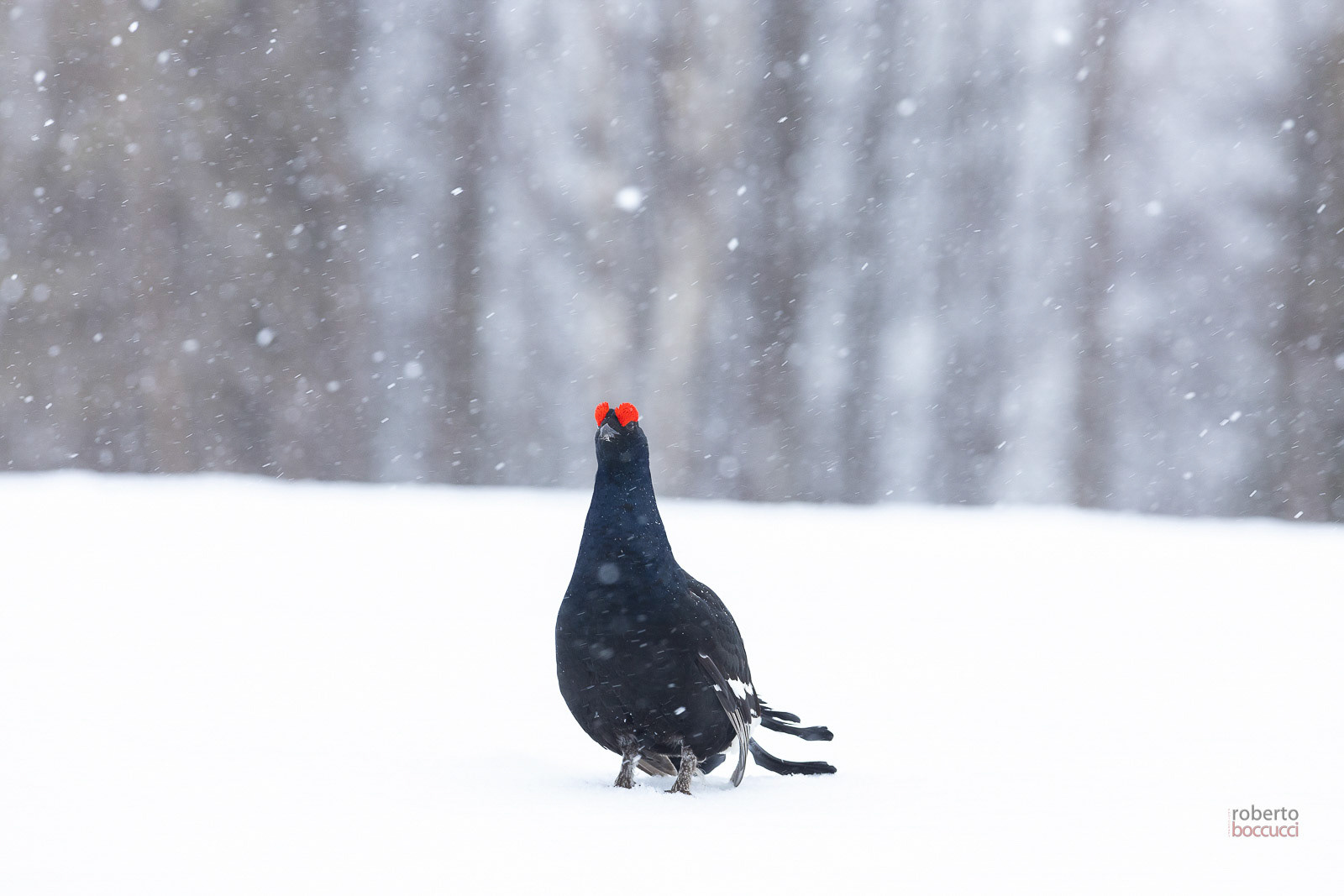

I Galli Forcelli sono molto meno “sensibili” dei Galli Cedroni rispetto ai movimenti del fotografo: ci si può sporgere anche parecchio dal capanno senza che ne siano minimamente disturbati; anzi si corre il serio rischio che entrino addirittura nel capanno stesso…
Fotografare questi splendidi Tetraonidi mi ha dato l’opportunità di poter respirare i silenzi ovattati delle albe nella foresta imbiancata, di poter osservare la natura assecondandone i suoi ritmi, di attendere l’occasione giusta apprezzando anche l’attesa. Tutto ciò in linea con le mie intenzioni di vivere più un’esperienza naturalistica che fotografica.
Capercaillies are unfortunately getting fewer in all their areas for climatic changes and for their scarce adaptability to the ever- increasing variations affecting their environment. This should have specific characteristics, first of all the average of its home range must be 550 ha (Storch 1995) ,then they need sites for courting, nidification ,breeding pasture and wintering where there are generally mixed natural woods with small hidden spots and a rich under-wood. Coniferae become fundamental in winter as fir and pine-needles are the only food in this season, while the presence of a thick under-wood of heath bushes is very important in summer as it can provide both an effective visual protection and varied and abundant food. I devoted four of the the six days I spent in Sweden to capercaillies and two to black grouse cocks . Their environments are completely different. The arenas of black grouse cocks tend to be completely open sites, sometimes even frozen lakes, because there is more light and the number of specimens in the arena is much higher, in fact, there were forty malesin the lek where I used to go. Even habits are different: black grouse cocks get to the lek in the afternoon when the grazing and still heavy light provides good photographic opportunities. At sunset the birds fly away to return at 1 or 2 o’clock at night . There is no risk to miss the spectacle, so deafening the call of forty males in love is! In the two days I was there the lek was visited by foxes, elks,