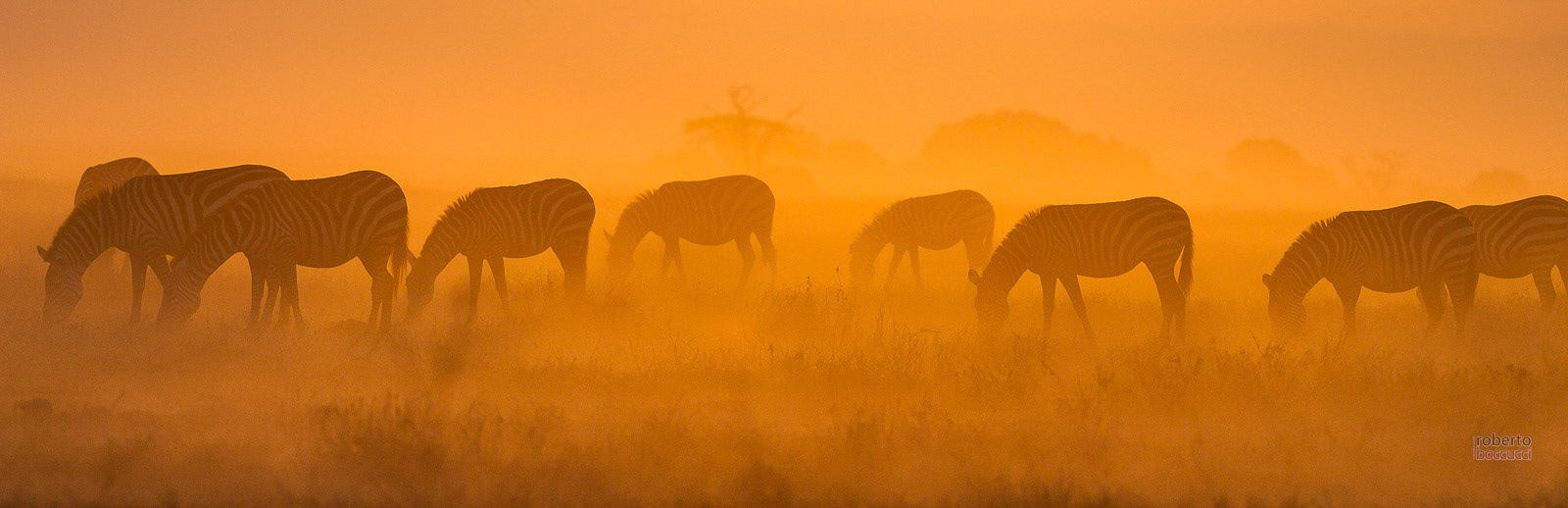
Il mio primo contatto con la savana viene filtrato dallo stretto oblò dell'aereo, una sorta di metafora dello schermo televisivo che fino ad oggi aveva costituito per me l'unica finestra su questi luoghi. Sotto di me scorrono immensi e verdi altipiani. Qui è il regno dell'erba: gli alberi sono ospiti. In questo periodo le pianure del Masai Mara sono fittamente punteggiate da una quantità indescrivibile di animali. Colonne di gnu fluiscono a volte lentamente, altre volte più velocemente, animati dalla fretta o forse dall'euforia o, mi piace pensarlo, dalla felicità. Le zebre si riuniscono in gruppi più piccoli e sono un po' ovunque. Le linee bianche e nere che si intersecano sembrano tracciare una sorta di involontario esperimento minimalista. I damalischi, con il loro inconfondibile profilo ascendente, si sono riservati il ruolo di sentinelle e svettano immancabili nell'erba della savana. Quelle enormi macchie nere che coprono la collina sono i branchi di bufali, presenti praticamente ovunque. La pianura è percorsa da file di animali che sembrano i mille rivoli di acqua che solcano la terra dopo il temporale. Talvolta invece è una sorta di brulichio in ordine sparso. La migrazione é un fenomeno imponente che sfugge ad ogni velleità descrittiva. Nemmeno le immagini riescono a trasmetterne le dimensioni e soprattutto la forza. C'é una sorta di inspiegabile energia che non è una semplice suggestione, ma pervade effettivamente e ovunque la pianura; un'energia che solo attraverso la presenza si è in grado d'intercettare. Forse é solo l'insopprimibile voglia di vivere di milioni di animali che vibra nell'aria e fluisce accanto alle loro vite anonime.
My first contact with the savannah is filtered through the narrow airplane window a kind of metaphor for the television screen that, until now, had been my only window onto these places. Beneath me, vast green plateaus unfold. Here, grass reigns supreme; trees are merely guests.
At this time of year, the plains of the Masai Mara are densely dotted with an indescribable abundance of animals. Columns of wildebeest flow across the land, sometimes slowly, sometimes faster, driven by urgency or perhaps by euphoria or, I like to think, by happiness. Zebras gather in smaller groups and are scattered everywhere. Their intersecting black-and-white lines seem to trace an unintentional minimalist experiment.
Topi antelopes, with their unmistakable sloping profile, have taken on the role of sentinels, standing out inevitably above the grass of the savannah. Those vast dark patches covering the hills are buffalo herds, present almost everywhere. The plains are crossed by lines of animals that resemble the countless rivulets of water carving through the land after a storm. At other times, it becomes a kind of restless, scattered swarming.
The migration is an overwhelming phenomenon, one that eludes any attempt at description. Not even images can convey its scale, and above all its power. There is an inexplicable energy that is not merely a suggestion, but one that truly permeates the plains everywhere an energy that can only be perceived through direct presence. Perhaps it is simply the irrepressible will to live of millions of animals, vibrating in the air and flowing alongside their anonymous lives.
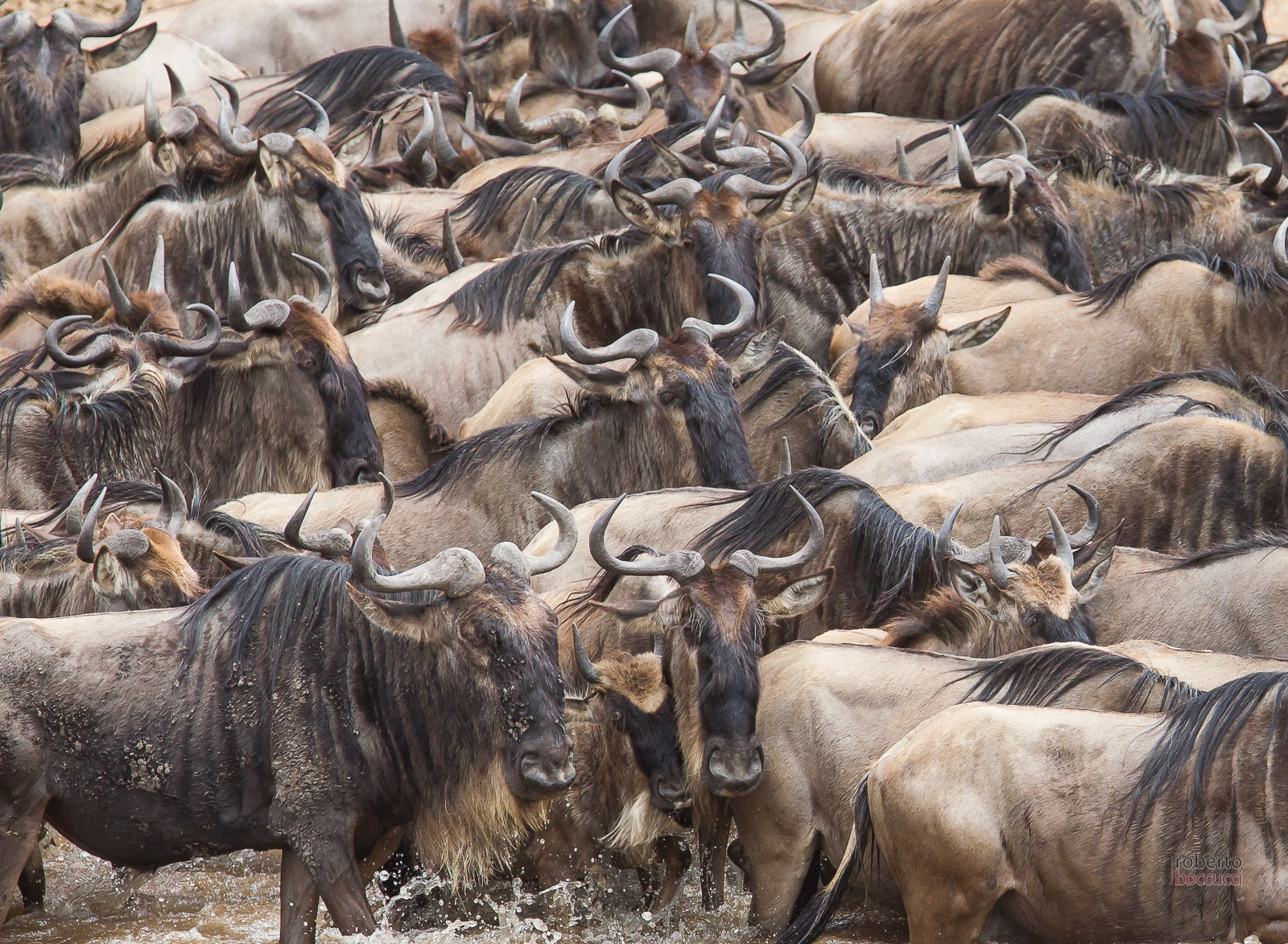
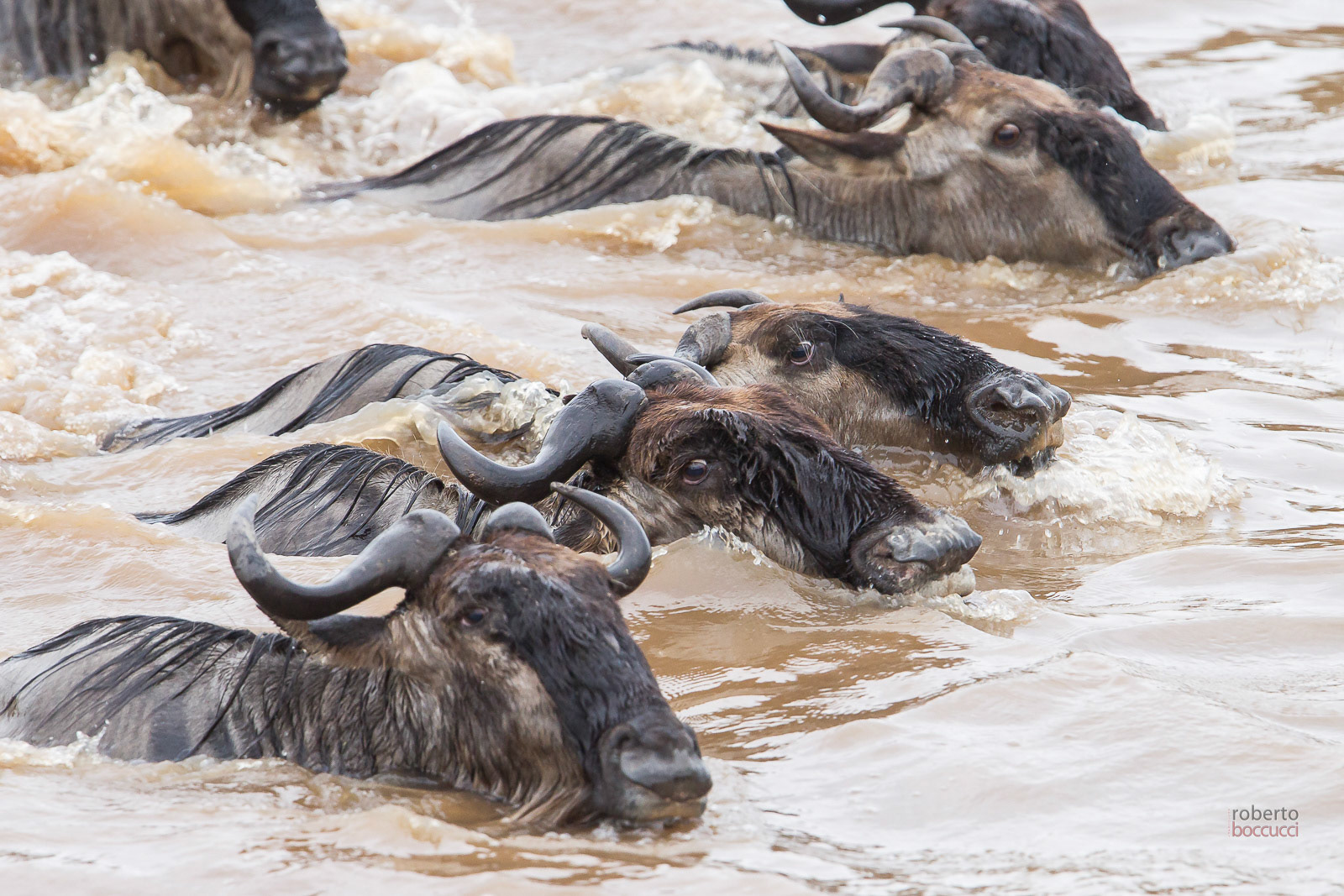
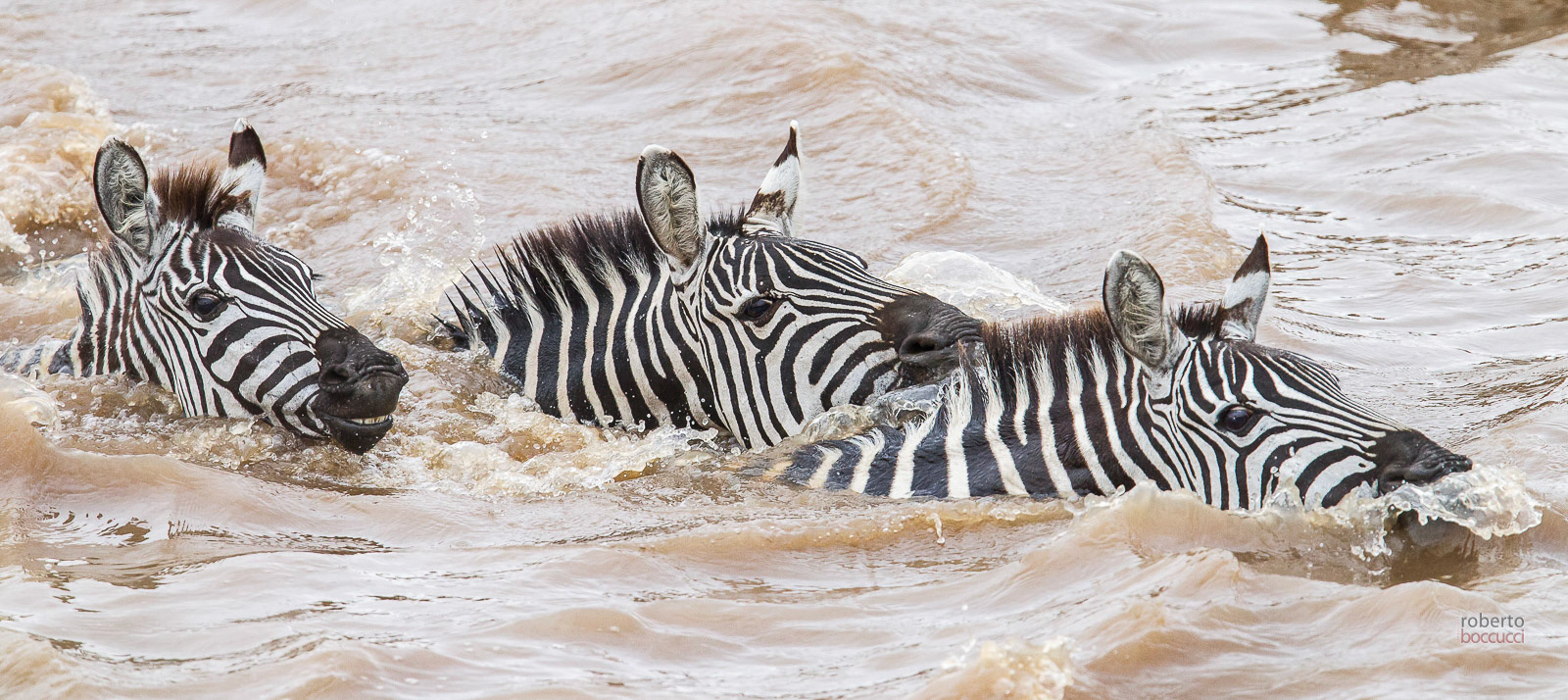

L'immagine iconica della Grande Migrazione è l'attraversamento del fiume Mara che separa i branchi dagli agognati pascoli del nord. Il crossing è un rito che per i nuovi nati ha il sapore di una vera e propria iniziazione. Gli animali si ammassano lungo le sponde del fiume in corrispondenza ai punti che l'esperienza ha dimostrato essere favorevoli e che l'utilizzo ha reso meno scoscesi. Il passaggio non è mai immediato. Gli animali si avvicinano a turno all'acqua, quasi a saggiare l'intensità della corrente o la presenza di coccodrilli o semplicemente per bere. Basta un fruscio o un semplice movimento anomalo per far scappare l'intero gruppo. Una zebra attraversa il fiume e giunta ormai in salvo sull'altra sponda, si accorge che nessuno l'ha seguita. A questo punto è un susseguirsi di nitriti rivolti ad incoraggiare l'attraversamento della sua famiglia, rimasta dall'altra parte del Mara. Passa circa mezz'ora di questi disperati tentativi e la zebra prende la decisione più sorprendente: torna indietro. Ma perché affidare nuovamente il suo corpo alle acque? Il legame familiare o sociale o più semplicemente la paura. Certo è che improvvisamente e risolutamente, decide di riattraversare il fiume. Quello che succede dopo è forse ancora più sorprendente: trova infatti ad aspettarla un piccolo gruppo di zebre che fanno a gara, in un'evidente euforia, per affiancarla in una frenetica ricerca di contatto. Sono scene che sembrano fatte apposta per mettere disordine nelle nostre certezze. Intanto gli animali sono ancora là, in un continuo andirivieni fra pascoli e fiume. I tentativi di attraversamento possono essere molto numerosi e durare anche ore, ma alla fine il più coraggioso si tuffa in acqua e tutto il branco, animato da un'improvvisa e inspiegabile fiducia, lo segue. A quel punto è un vortice di tuffi, spruzzi, muggiti, rumore di zoccoli che scivolano sulla roccia delle sponde. La corrente spinge forte e le file degli animali si arcuano piegate dalla forza delle acque. La testa si contorce per restare fuori dall'acqua e accedere all'aria. Gli occhi roteano nello sforzo immane di controllare tutto quello che succede intorno. Infine "l'approdo", la liberazione e la ritrovata calma. È in queste situazioni che si ha la chiara cognizione di come lo gnu abbia un'agilità insospettabile, capace di compiere dei salti incredibili e cambi di direzioni repentini. Il corpo di questo animale, solo apparentemente sgraziato, sembra il risultato di uno sforzo di volontà, quasi a voler dissimulare la realtà di quella che invece è una macchina evoluzionisticamente perfetta. Da questa parte del fiume, ci sono i predatori che stanno aspettando da mesi questo momento.
I leoni sonnecchiano tutto il giorno aspettando il favore delle tenebre per il loro attacco. Le carcasse degli gnu, immancabilmente segnalate da un capannello di avvoltoi e marabù, stanno là a testimoniare la loro incredibile potenza, spesso espressa attraverso azioni di gruppo micidiali.
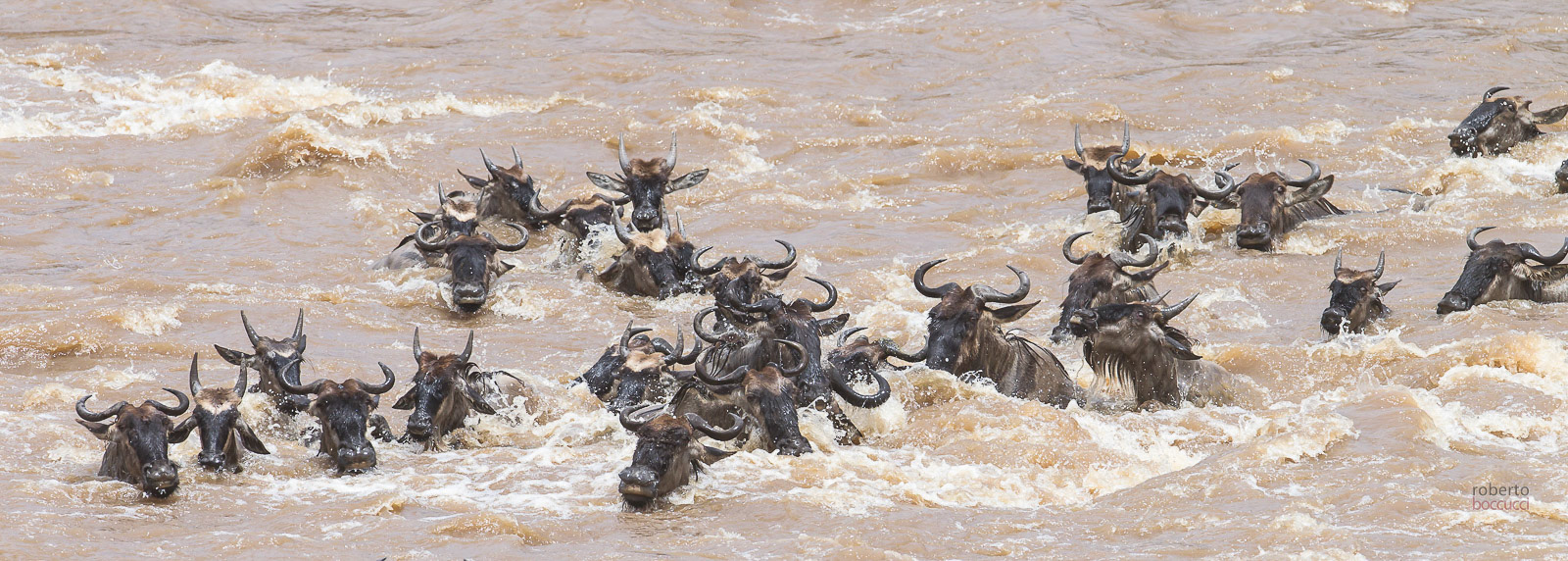
The iconic image of the Great Migration is the crossing of the Mara River, which separates the herds from the longed-for northern grazing grounds. The crossing is a rite that, for the newborns, carries the weight of a true initiation. Animals gather along the riverbanks at spots that experience has proven favorable places made less steep by repeated use.
The passage is never immediate. One by one, the animals approach the water, as if testing the strength of the current, sensing the presence of crocodiles, or simply stopping to drink. A rustle, or even a slight, unusual movement, is enough to send the entire group fleeing.
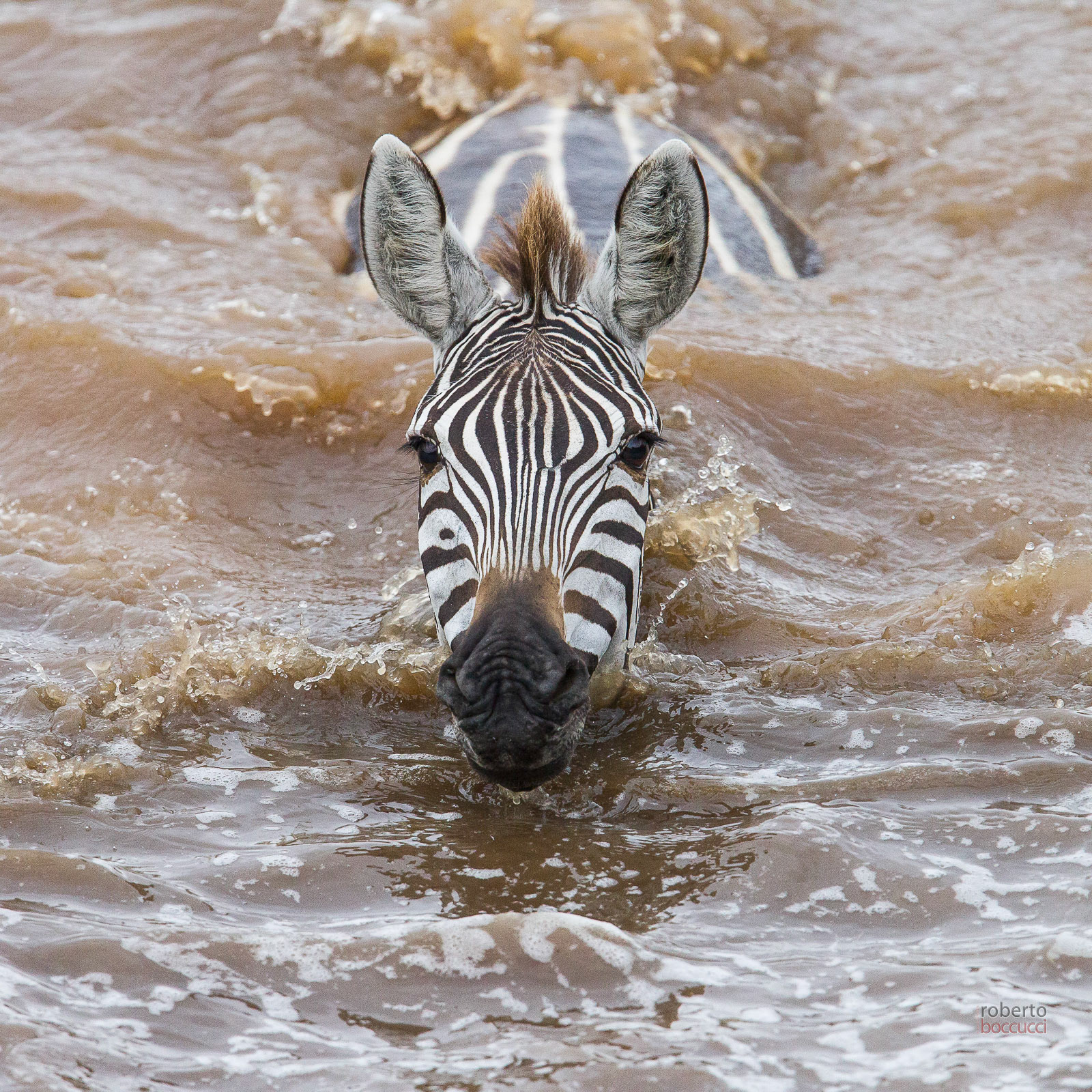
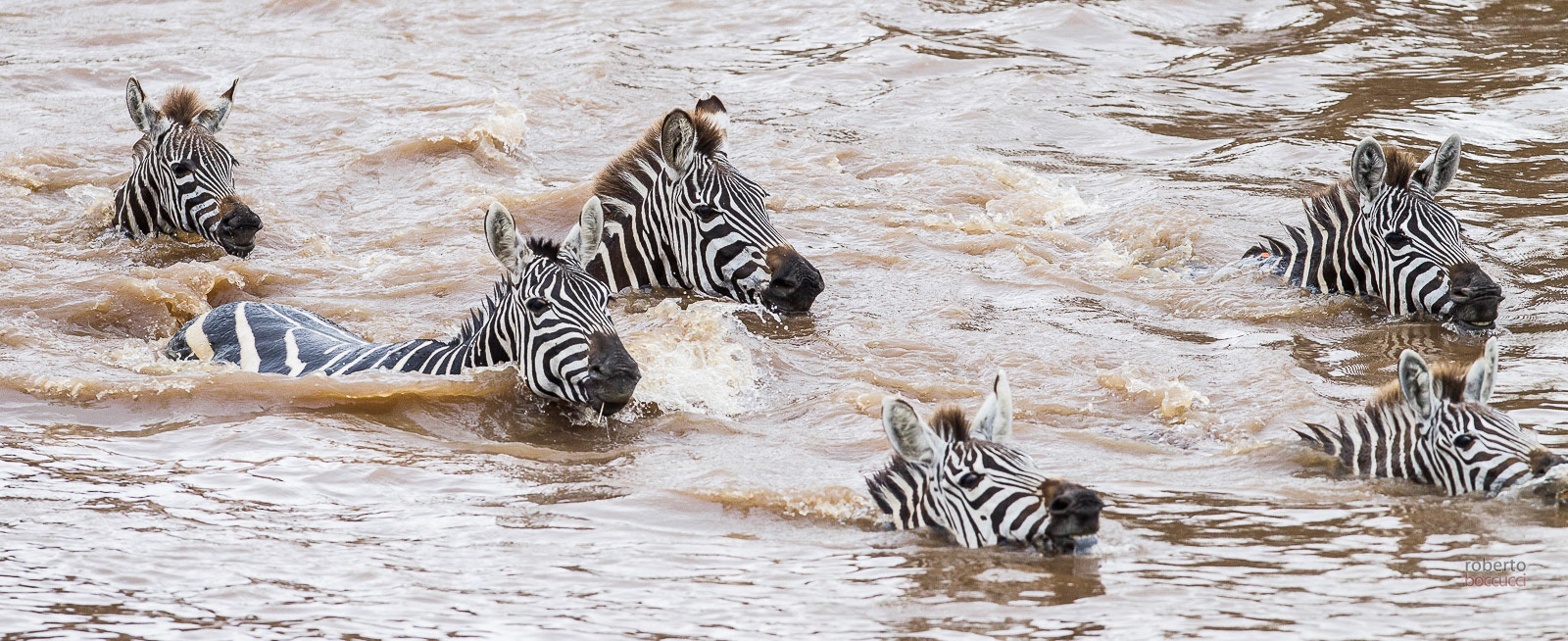
A zebra crosses the river and, once safely on the opposite bank, realizes that no one has followed. What follows is a series of whinnies, meant to encourage the rest of her family still stranded on the other side of the Mara. About half an hour passes in these desperate attempts, until the zebra makes the most surprising decision: she turns back. Why entrust her body once again to the waters? Family bonds, social ties, or perhaps simply fear. What is certain is that, suddenly and decisively, she chooses to cross the river again.
What happens next is perhaps even more astonishing. A small group of zebras is waiting for her, competing clearly euphoric to flank her in a frantic search for contact. These are scenes that seem designed to unsettle our certainties. Meanwhile, the animals are still there, in a continuous back-and-forth between pasture and river. Crossing attempts can be numerous and last for hours, but eventually the boldest plunges into the water and the entire herd, driven by a sudden and inexplicable trust, follows.
At that point, it becomes a vortex of dives, splashes, bellows, and the sound of hooves slipping on the rocky banks. The current surges powerfully, bending the lines of animals into arcs shaped by the force of the water. Heads twist upward to stay above the surface, straining for air. Eyes roll in the immense effort to control everything happening around them. Then comes the landing—the release, and the return of calm.
It is in moments like these that one fully realizes the unsuspected agility of the wildebeest, capable of extraordinary leaps and sudden changes of direction. The body of this animal, only seemingly awkward, appears to be the result of a deliberate act of will—almost an attempt to conceal the reality of what is, in fact, an evolutionarily perfect machine.
On this side of the river, predators have been waiting for months for this moment. Lions spend the day dozing, awaiting the cover of darkness to launch their attack. The carcasses of wildebeest, invariably marked by gatherings of vultures and marabou storks, bear silent witness to the lions’ incredible power—often expressed through devastatingly effective group hunts.
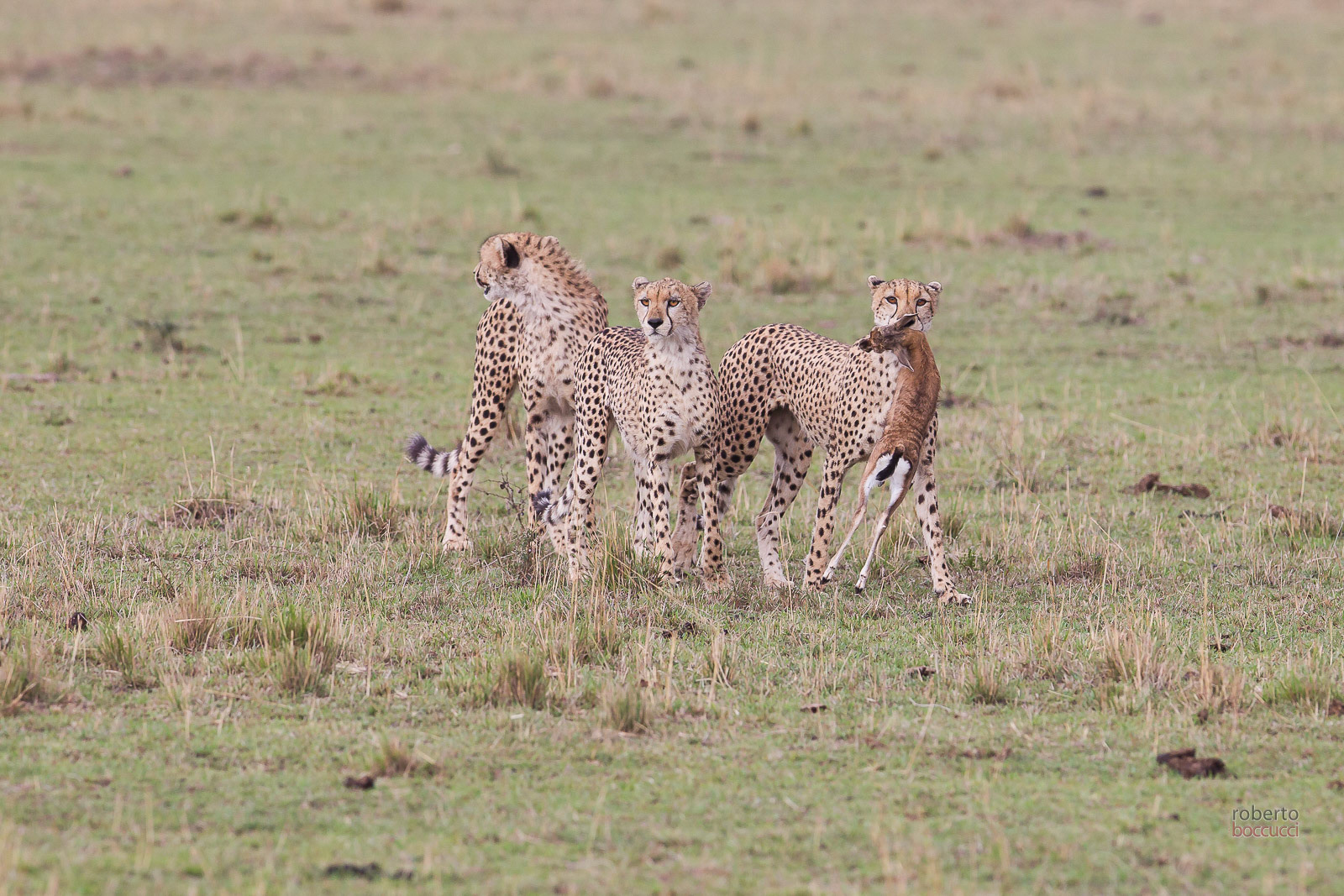
I ghepardi si giocano invece le loro possibilità in campo aperto e in pieno giorno. Ad un certo punto si svegliano dal loro sonno, si alzano e camminano con decisione verso un branco di gazzelle. Ormai tutte le potenziali prede costituiscono fronte comune e osservano ogni loro movimento. In queste condizioni un attacco ha ben poche possibilità di essere portato a termine con successo. Infatti i due giovani ghepardi, mandati in avanscoperta dalla mamma, riescono solo a creare un po' di scompiglio fra gli gnu, che fanno fronte compatto e addirittura li mettono in fuga. Ancora più imbarazzante é l'esito dell'attacco alle gazzelle che filano via ad una velocità incredibile: si vedono in lontananza solo le molte linee tracciate dalla polvere. A questo punto mamma ghepardo passa all'azione e decide di creare un po' di scompiglio nel branco di gazzelle con dei finti attacchi, il tutto al fine di isolare qualche piccolo. Dopo un paio i tentativi riesce nel suo intento: il piccolo di gazzella che si dimena cercando di liberarsi dal morso di mamma ghepardo è atteso da un destino terribile davanti agli occhi di sua madre che ha osservato la scena da lontano.
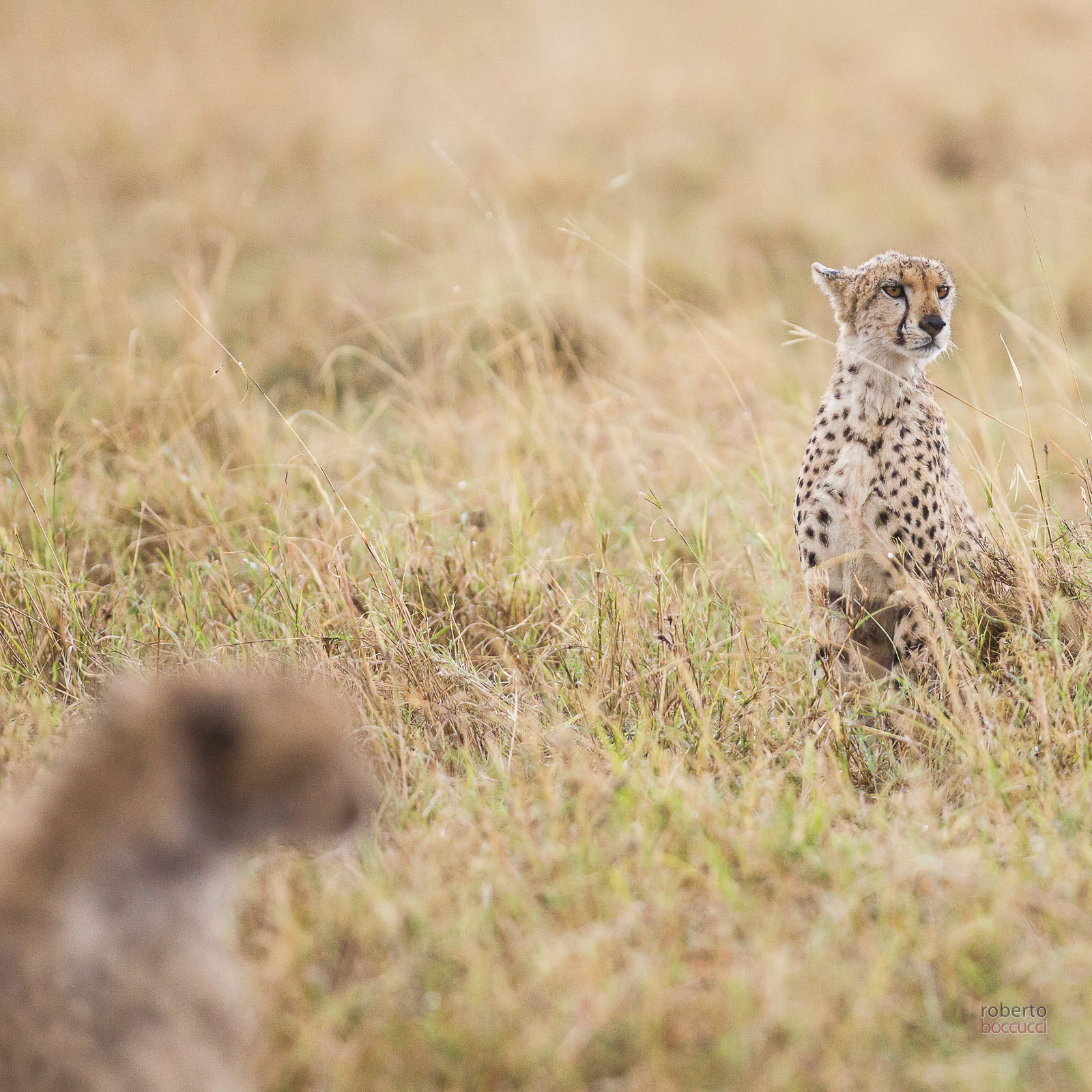
Cheetahs, instead, play out their chances in open ground and in full daylight. At a certain point they wake from their rest, rise, and move with determination toward a herd of gazelles. By now, all potential prey has formed a united front, watching their every move. Under these conditions, an attack has very little chance of success.
Indeed, the two young cheetahs, sent forward by their mother as scouts, manage only to create a brief disturbance among the wildebeest, which hold their ground and even drive them off. Even more humiliating is the outcome of the attempt on the gazelles, which streak away at astonishing speed—leaving, in the distance, nothing but countless lines traced in the dust.
At this point, the mother cheetah takes action. She begins to create confusion within the gazelle herd through a series of feigned charges, all aimed at isolating a youngster. After a couple of attempts, she succeeds: the young gazelle, struggling desperately to break free from the mother cheetah’s grip, meets a terrible fate before the eyes of its own mother, who has watched the scene unfold from afar.
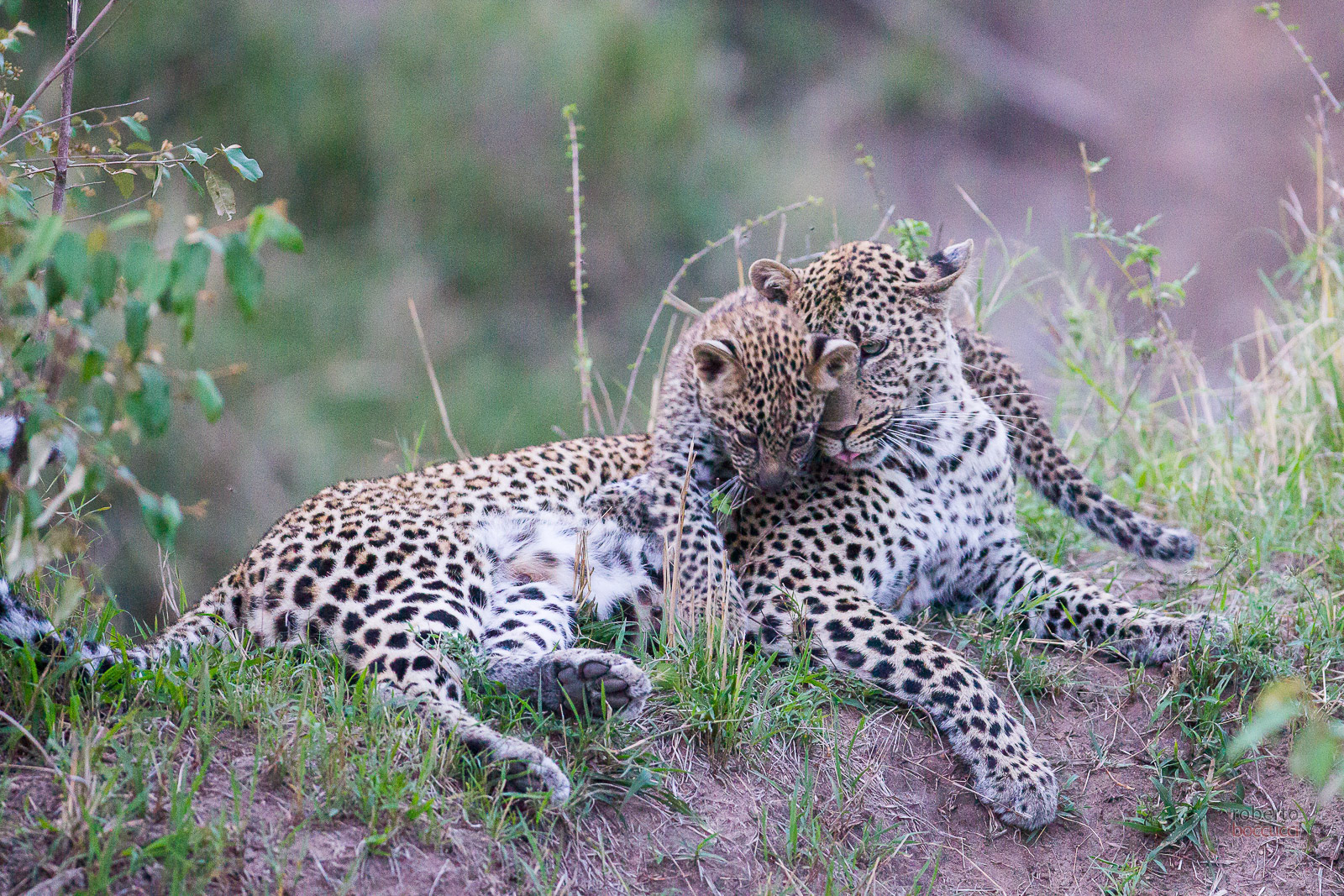
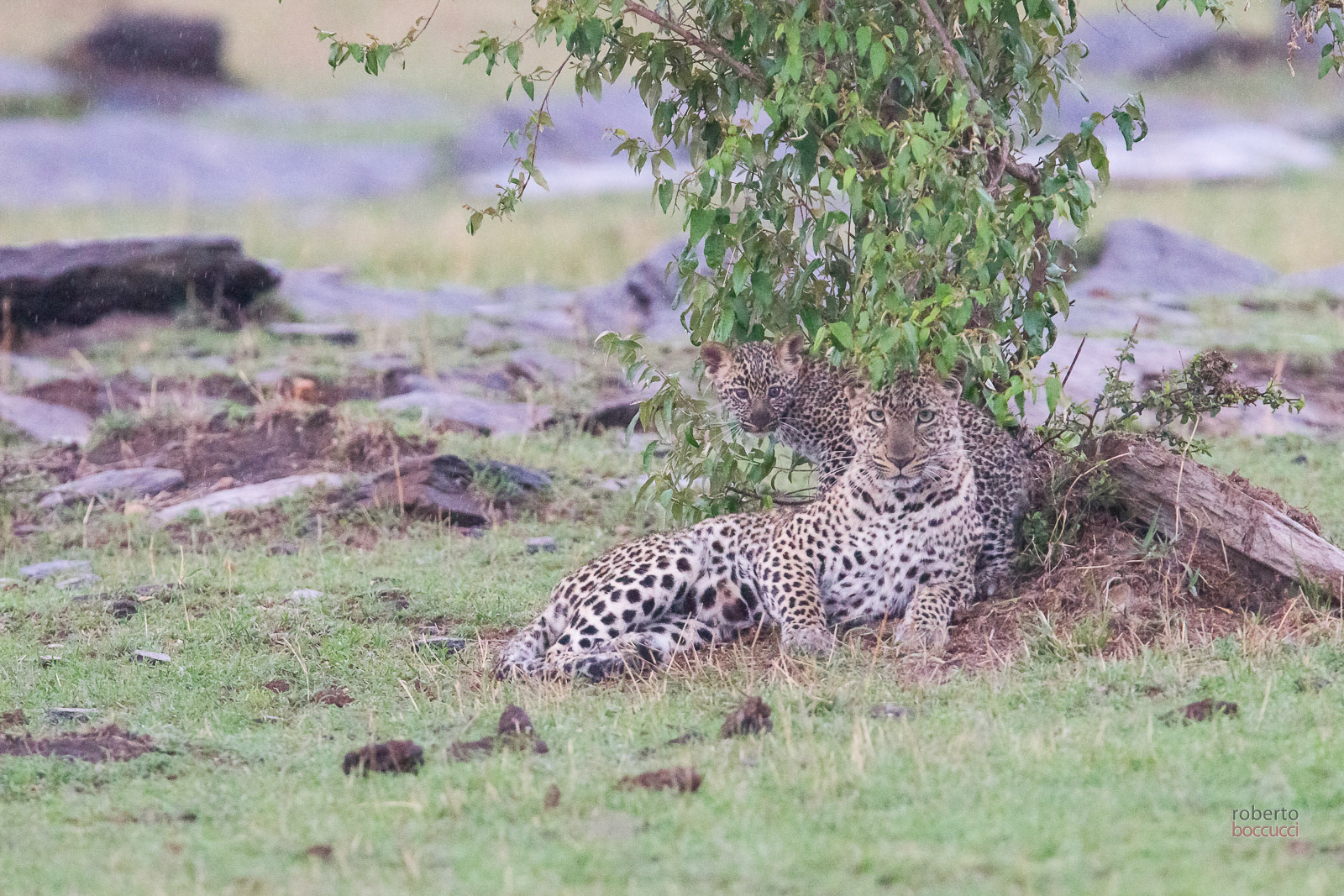
Il leopardo invece vive al margine della boscaglia che lambisce la savana. È il più elusivo fra i grandi felini e basta guardarlo per rendersi conto che è una perfetta macchina per uccidere. É un miscuglio fra la potenza del leone e la velocità del ghepardo. Un intero pomeriggio a cercarlo si è rivelato infruttuoso fino a quando, ormai sulla via del ritorno e con il sole ormai tramontato, é finalmente apparso. Improvvisamente ha cominciato ad emettere dei versi. Non il solito ruggito, ma quasi dei colpi di tosse. È chiaramente un richiamo. Dai cespugli viene fuori uno dei due cuccioli, quello scampato all'attacco della iena. Probabilmente l'istinto lo aveva portato a stare nascosto e immobile per lunghe ore, dato che più volte nel corso della giornata avevamo tenuto sotto controllo quella zona senza neppure scorgerlo. Abbiamo condiviso con loro l'intimità del gioco fino a quando l'oscurità non li ha avvolti completamente.
The leopard, instead, lives along the edge of the woodland that borders the savannah. It is the most elusive of the great cats, and a single glance is enough to reveal a perfect killing machine. It is a blend of the lion’s power and the cheetah’s speed.
An entire afternoon spent searching for it proved fruitless, until—on our way back, with the sun already set—it finally appeared. Suddenly, it began to emit a series of calls: not the familiar roar, but something closer to a cough. It was clearly a summons. From the bushes emerged one of the two cubs, the one that had survived the hyena’s attack.
Instinct had likely driven it to remain hidden and motionless for many hours, as we had repeatedly monitored that area throughout the day without catching even a glimpse of it. We shared the intimacy of their play until darkness completely enveloped them.

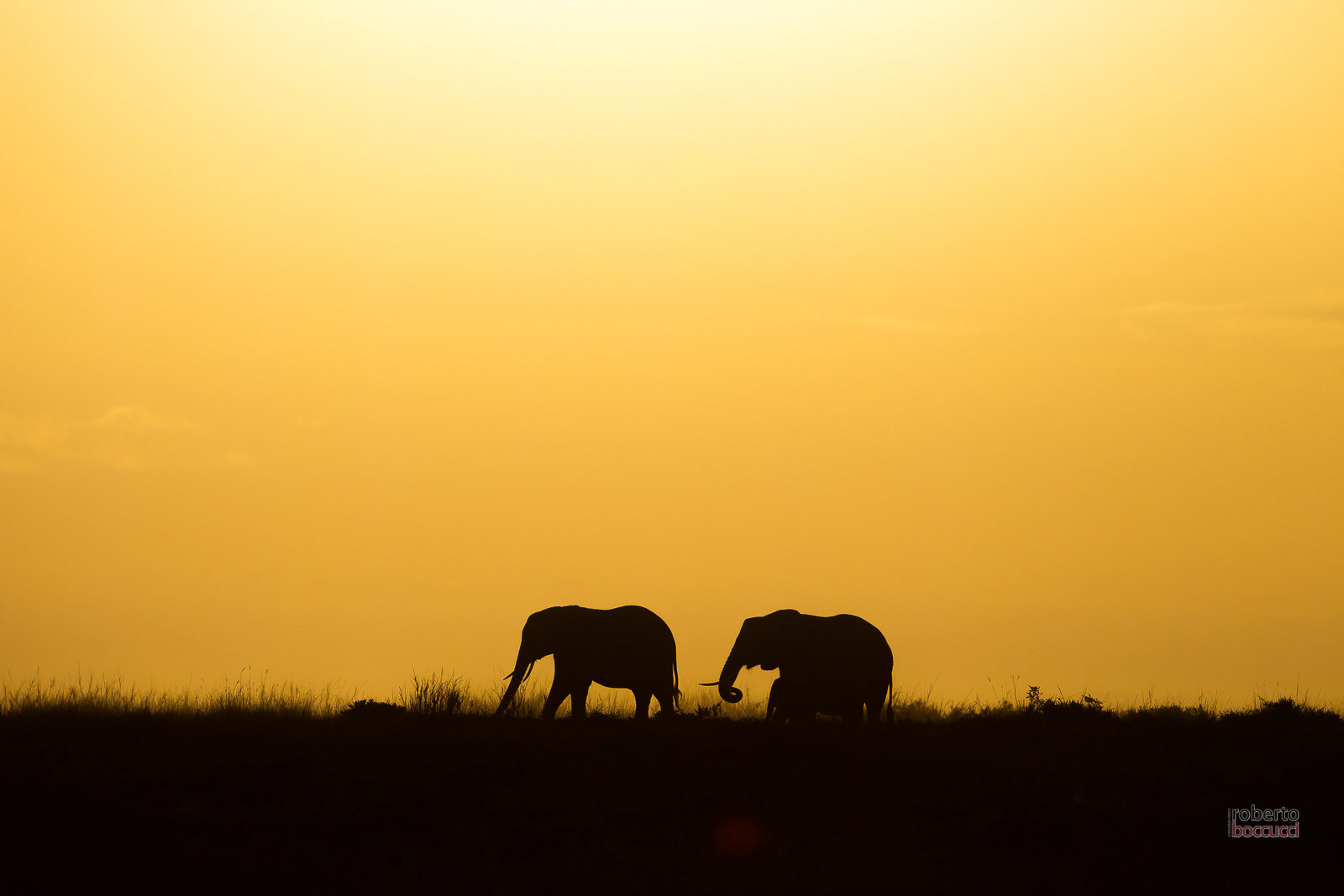
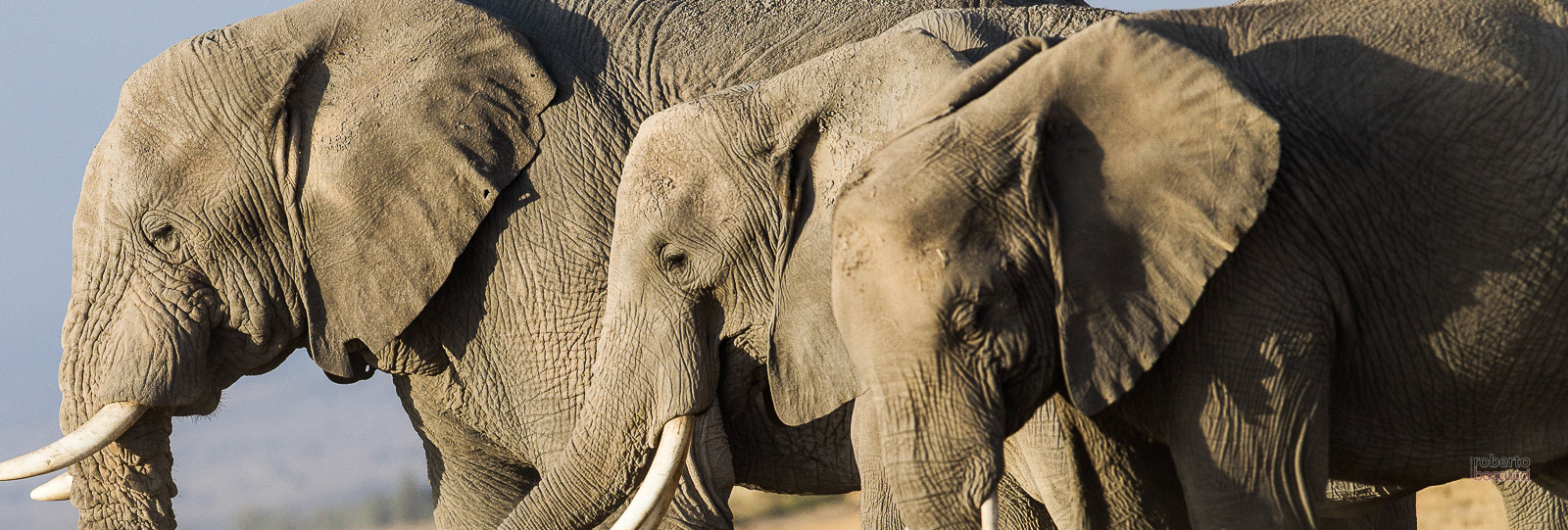
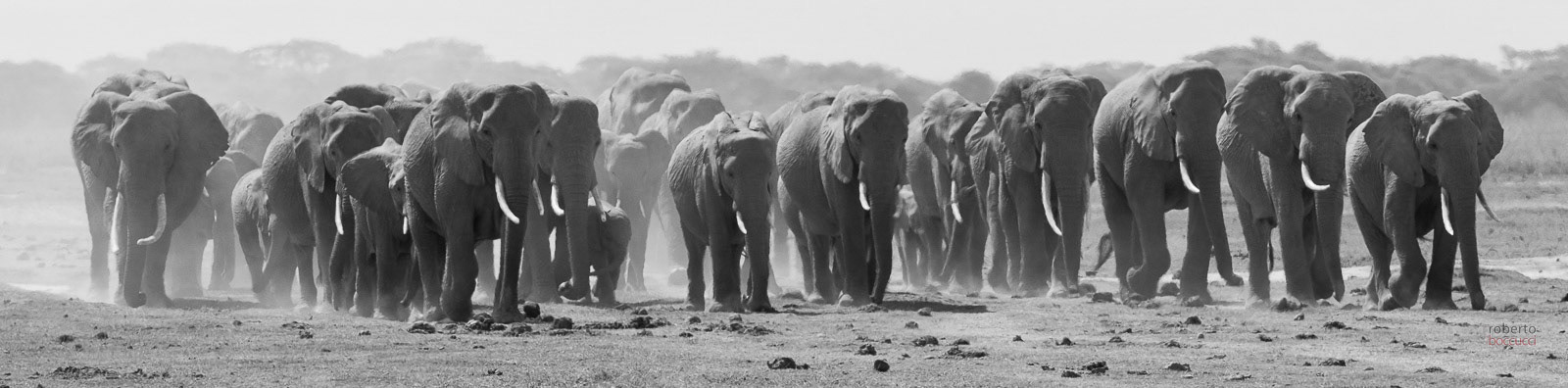
L'incontro più emozionante resta comunque l'elefante. In Africa forse il luogo migliore per vederlo è l'Amboseli, ai piedi del Kilimangiaro. Qui l'incontro con questo animale è praticamente continuo: sono ovunque. Numericamente sono anche meno di quelli che popolano il Masai Mara, però qui sono molto più concentrati. Infatti in un contesto ambientale abbastanza arido, la presenza di paludi attira gli elefanti, che in una sorta di processione continua, alla mattina dalla boscaglia si recano alle paludi e alla sera compiono il percorso inverso. I gruppi a volte possono essere anche molto numerosi, anche oltre i 40 individui. L'immagine più evocativa è vederli immersi in acqua o in lontananza con l'aria calda che rende tremolante la loro figura: é una visione molto simile a quella che doveva apparire ai nostri progenitori che, con ben altri intendimenti, vagavano nelle grandi pianure della nostra Europa a caccia di mammut.
The most moving encounter of all, however, remains the elephant. In Africa, perhaps the best place to see it is Amboseli, at the foot of Mount Kilimanjaro. Here, encounters with these animals are almost constant—they are everywhere. Their numbers may be smaller than those found in the Masai Mara, but here they are far more concentrated.
In a largely arid environment, the presence of swamps draws elephants in, and in a kind of endless procession, they move from the woodland to the marshes in the morning, only to retrace their steps in the evening. At times, the groups can be very large, numbering more than forty individuals.
The most evocative image is seeing them immersed in water, or in the distance, their silhouettes shimmering in the heat haze—an image strikingly similar to what must have appeared before our ancestors, who, with very different intentions, once roamed the vast plains of Europe in search of mammoths.

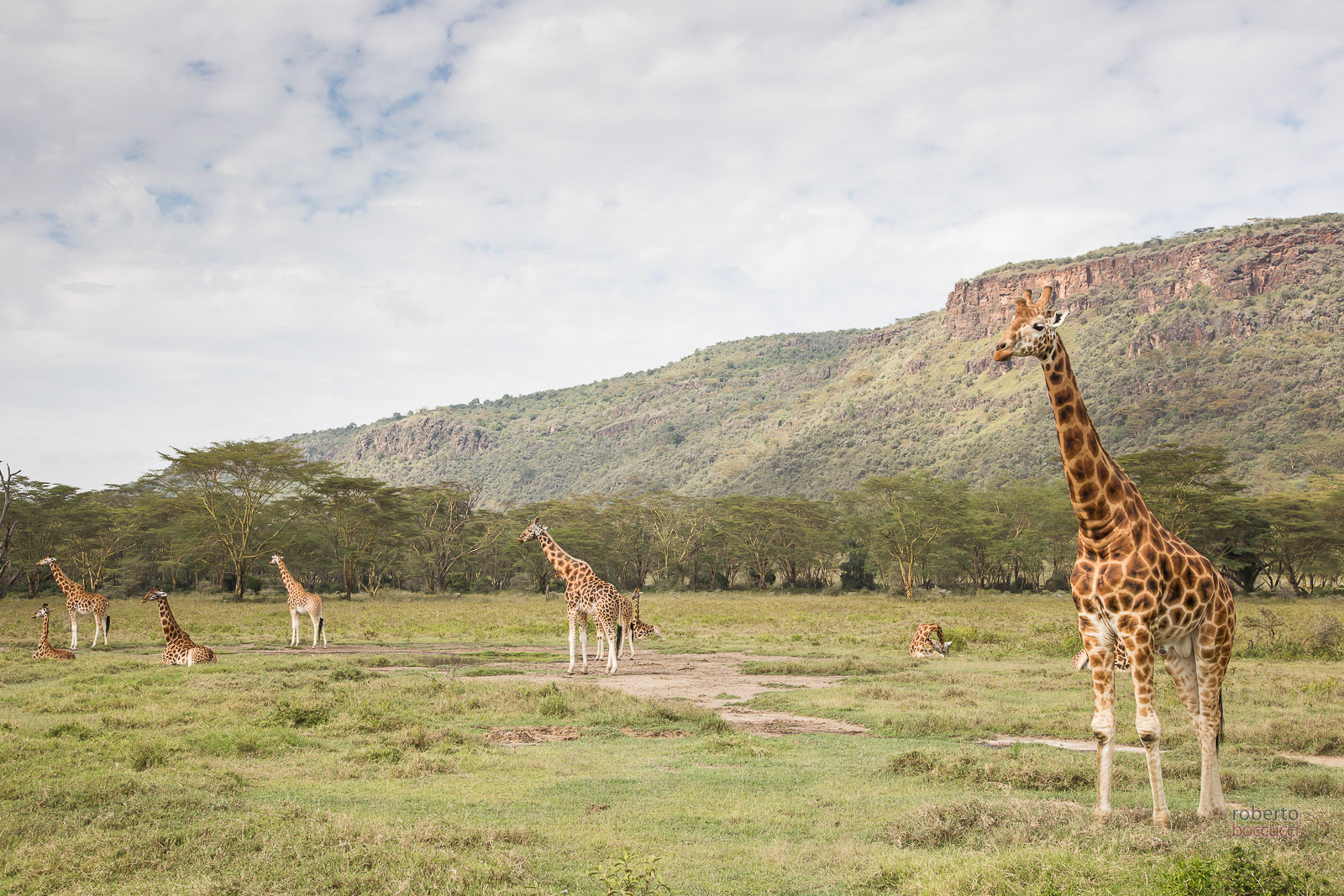
E la giraffa? Per quanto possa sembrare irrealistico non è la sua altezza la cosa che colpisce di più. Quello è scontato. Io invece la associo al silenzio. Ci si può trovare in mezzo a un grosso branco di giraffe e non sentire il benché minimo rumore: é come se non ci fossero. Anche i movimenti vengono gestiti con estrema lentezza, direi quasi con una voluta discrezione.
And the giraffe? As unrealistic as it may seem, it is not its height that strikes the most—that is a given. I associate it instead with silence. One can find oneself surrounded by a large herd of giraffes and not hear the slightest sound: it is as if they were not there at all. Even their movements are carried out with extreme slowness, almost with a deliberate sense of discretion.
La cosa più importante che mi ha lasciato l'Africa è il sorriso dei bambini. A volte li scorgi a giocare in mezzo a una distesa di erba gialla cresciuta a stento sulla sabbia, e ti chiedi da dove vengono dato che fin dove finisce l'orizzonte non c'è una casa, una capanna... assolutamente nulla. Eppure questi bambini hanno sempre un sorriso per te o alzano la mano per un saluto quando attraversiamo il loro mondo da un'auto in corsa. Gli occhi non esprimono dolore:sono felici.
Roberto Boccucci
The most important thing Africa has given me is the smiles of its children. At times you see them playing in the middle of a vast expanse of yellow grass, barely growing out of the sand, and you wonder where they come from, since as far as the eye can see there is no house, no hut—absolutely nothing.
And yet these children always have a smile for you, or they raise a hand in greeting as we pass through their world in a moving vehicle. Their eyes do not speak of pain—they speak of happiness.
Roberto Boccucci