THE WILDLIFE OF KENYA
Il mio primo contatto con la savana viene filtrato dallo stretto oblò dell’aereo, una sorta di metafora dello schermo televisivo che, fino a quel momento, aveva costituito per me l’unica finestra su questi luoghi.
Sotto di me scorrono immensi altipiani verdi. Qui è il regno dell’erba: gli alberi sono ospiti.
In questo periodo le pianure del Masai Mara sono fittamente punteggiate da una quantità indescrivibile di animali. Colonne di gnu fluiscono a volte lentamente, altre più velocemente, animate dalla fretta o forse dall’euforia o, mi piace pensarlo, dalla felicità. Le zebre si raccolgono in gruppi più piccoli e sono un po’ ovunque: le linee bianche e nere che si intersecano sembrano tracciare sulla pianura una sorta di involontario esperimento minimalista.
I damalischi, con il loro inconfondibile profilo ascendente, si sono riservati il ruolo di sentinelle e svettano immancabili sopra l’erba della savana. Le enormi macchie nere che coprono le colline sono invece branchi di bufali.
La pianura è percorsa da file di animali che sembrano i mille rivoli d’acqua che solcano la terra dopo un temporale. Altrove è un brulichio in ordine sparso. Tutto si muove.
La Grande Migrazione è un fenomeno imponente che sfugge a ogni velleità descrittiva. Nemmeno le immagini riescono a trasmetterne le dimensioni e, soprattutto, la forza. C’è una sorta di inspiegabile energia che pervade la pianura. Non credo sia soltanto suggestione: la si percepisce ovunque, ma soltanto essendo lì.
Forse è semplicemente l’insopprimibile volontà di vivere di milioni di animali che vibra nell’aria e fluisce insieme alle loro vite anonime.
L’immagine iconica della migrazione rimane l’attraversamento del Mara, il fiume che separa i branchi dagli agognati pascoli del nord.
Gli animali si ammassano lungo le rive nei punti che l’esperienza ha dimostrato essere favorevoli e che il passaggio di migliaia di zoccoli ha reso meno scoscesi. Ma l’attraversamento non è mai immediato.
Gli gnu si avvicinano all’acqua e poi arretrano. Tornano ancora, quasi a saggiarne la corrente, a controllare ciò che si nasconde sotto la superficie o semplicemente a bere. Basta un fruscio, un movimento anomalo, qualcosa che noi neppure riusciamo a percepire, perché l’intero gruppo fugga improvvisamente dalla riva.
My first encounter with the savannah is filtered through the narrow window of an airplane, a kind of metaphor for the television screen that, until then, had been my only window onto these places.
Below me stretch vast green plateaus. Here, grass reigns supreme: trees are merely guests.
At this time of year, the plains of the Masai Mara are dotted with an almost unimaginable number of animals. Columns of wildebeest flow across the landscape, sometimes slowly, sometimes more quickly, driven by urgency, perhaps excitement or, as I like to imagine, happiness. Zebras gather in smaller groups and seem to be everywhere: their intersecting black and white stripes trace what looks like an unintentional experiment in minimalism across the plains.
Topi, with their unmistakable upward-sloping profiles, have appointed themselves sentinels, their silhouettes invariably rising above the savannah grass. The enormous dark patches covering the hillsides are herds of buffalo.
Long lines of animals cross the plains like the countless streams of water that carve their way through the earth after a storm. Elsewhere, movement becomes a seemingly chaotic swarm. Everything is in motion.
The Great Migration is a phenomenon of such magnitude that it defies every attempt at description. Not even photographs can convey its scale and, above all, its power. There is an inexplicable energy that seems to permeate the entire plain. I do not believe it is merely a matter of imagination: you can feel it everywhere, but only by being there.
Perhaps it is simply the irrepressible will to live of millions of animals, vibrating in the air and flowing alongside their anonymous lives.
The iconic image of the migration remains the crossing of the Mara River, which separates the herds from the long-awaited grazing grounds to the north.
The animals gather along the riverbanks at points that experience has shown to be favourable and that the passage of thousands of hooves has made less steep. But the crossing is never immediate.
The wildebeest approach the water, then retreat. They return again, as though testing the strength of the current, checking what might be lurking beneath the surface, or simply taking a drink. The slightest rustle, an unusual movement, something we cannot even perceive, is enough to send the entire group fleeing from the riverbank.
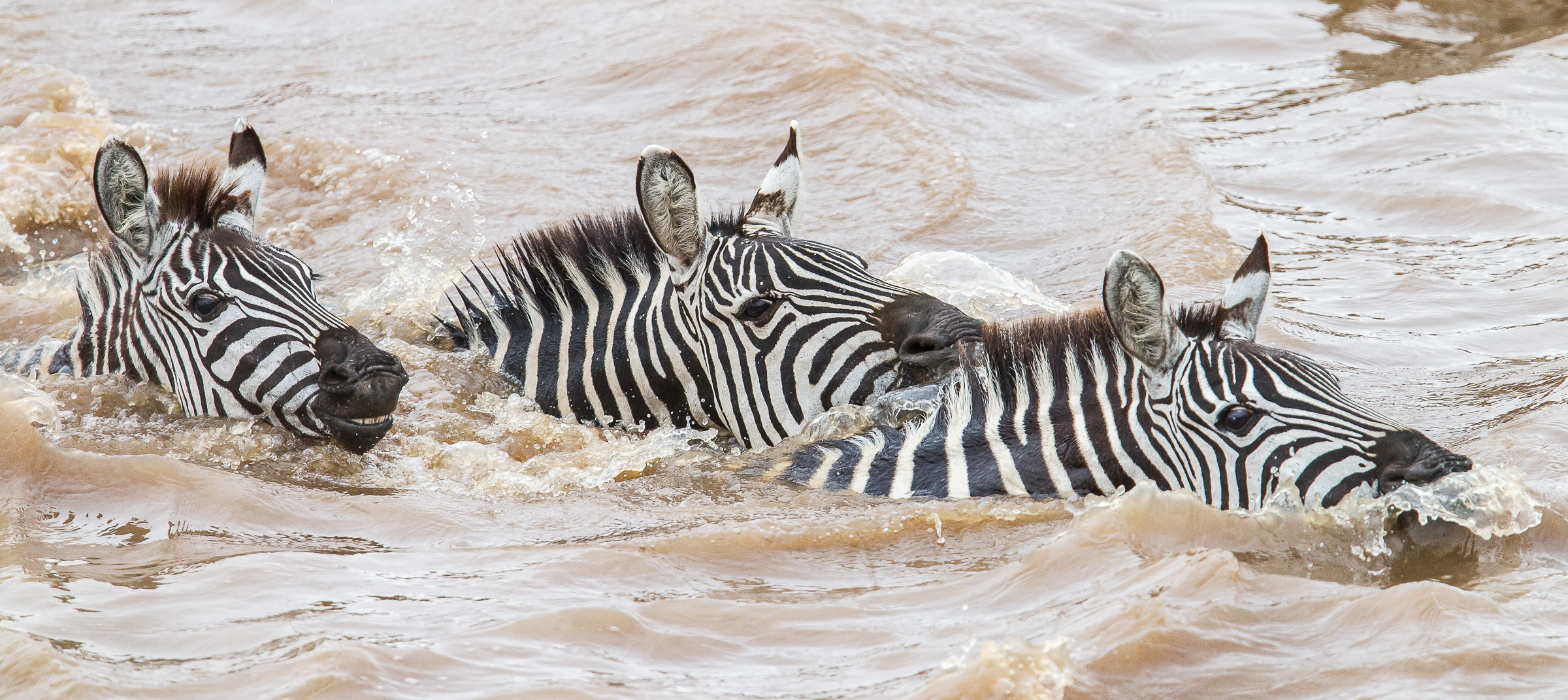
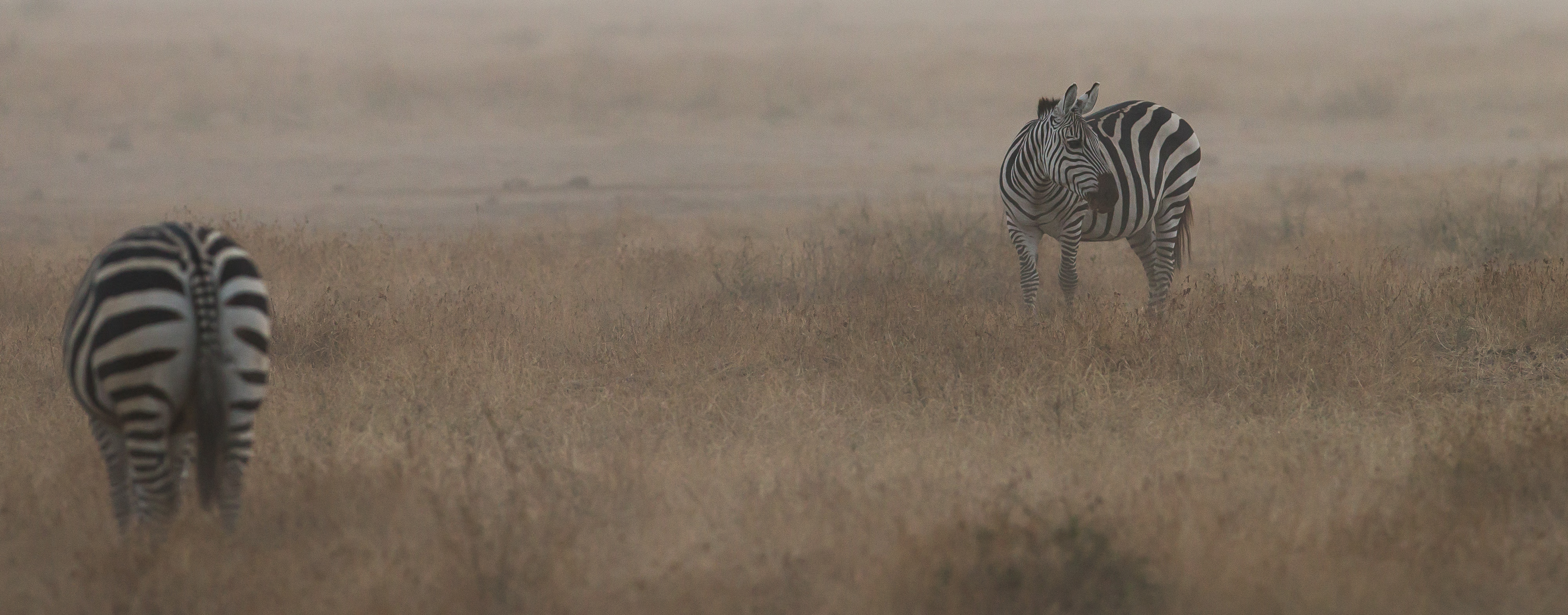
Una zebra attraversa il fiume da sola.
Raggiunge l’altra sponda e soltanto allora sembra accorgersi che nessuno l’ha seguita. Comincia a nitrire insistentemente verso il gruppo rimasto dall’altra parte del Mara. Passano i minuti. Continua a chiamare.
Per quasi mezz’ora la scena non cambia.
Poi accade qualcosa che non mi aspetto: la zebra torna indietro.
Si immerge nuovamente nel fiume e riaffida il proprio corpo alla corrente che aveva appena superato. Non so perché lo faccia. Forse per il legame con il gruppo, forse per paura di essere rimasta sola. Qualunque sia la ragione, riattraversa il Mara.
Dall’altra parte alcune zebre sembrano aspettarla. Quando raggiunge la riva le si stringono intorno, quasi facendo a gara per affiancarla, in una frenetica ricerca di contatto.
Sono scene che sembrano fatte apposta per mettere disordine nelle nostre certezze.
Intanto gli animali continuano il loro andirivieni tra i pascoli e il fiume. I tentativi possono durare ore. Poi, improvvisamente, uno gnu si getta in acqua.
E tutto cambia.
Il branco, come animato da un’improvvisa e inspiegabile fiducia, lo segue.
È un vortice di tuffi, spruzzi, muggiti e zoccoli che scivolano sulle rocce delle sponde. La corrente spinge forte e le file degli animali si incurvano sotto la pressione dell’acqua. Le teste si protendono verso l’alto alla ricerca dell’aria, gli occhi sembrano voler controllare tutto ciò che accade intorno.
Poi l’approdo.
La liberazione.
E quasi immediatamente ritorna la calma.
È in questi momenti che si comprende quanto l’apparenza dello gnu possa ingannare. Quel corpo apparentemente sgraziato rivela un’agilità sorprendente: salti, accelerazioni e improvvisi cambi di direzione. Sembra quasi che la sua forma bizzarra voglia dissimulare ciò che in realtà è: il risultato perfettamente funzionale di un lunghissimo processo evolutivo.
Ma dall’altra parte del fiume qualcuno sta aspettando da mesi questo momento.
I leoni trascorrono gran parte della giornata immobili nell’erba, in attesa del favore delle tenebre. Le carcasse degli gnu, immancabilmente segnalate dai capannelli di avvoltoi e marabù, raccontano ciò che accade quando il branco si mette in caccia.
A zebra crosses the river alone.
She reaches the opposite bank and only then seems to realise that none of the others has followed. She begins neighing insistently towards the group still waiting on the other side of the Mara. Minutes pass. She keeps calling.
For almost half an hour, nothing changes.
Then something happens that I do not expect: the zebra turns back.
She enters the river once again, surrendering her body to the same current she has only just overcome. I do not know why she does it. Perhaps because of her bond with the group, perhaps because she is afraid of being alone. Whatever the reason, she crosses the Mara again.
On the other side, several zebras seem to be waiting for her. As she reaches the bank, they crowd around her, almost competing to walk beside her in a frantic search for physical contact.
These are the kinds of scenes that seem designed to unsettle our certainties.
Meanwhile, the animals continue moving back and forth between the grazing grounds and the river. Their attempts to cross can last for hours. Then, suddenly, one wildebeest plunges into the water.
And everything changes.
The entire herd follows, as though seized by a sudden and inexplicable surge of confidence.
It becomes a whirlwind of plunging bodies, splashing water, bellowing and hooves slipping on the rocks along the banks. The current is powerful, bending the lines of animals beneath its force. Heads stretch upwards in search of air, while their eyes seem desperate to take in everything happening around them.
Then comes the landing.
Liberation.
And almost immediately, calm returns.
It is in these moments that you realise just how deceptive the wildebeest's appearance can be. That seemingly awkward body reveals astonishing agility: leaps, sudden bursts of speed and abrupt changes of direction. It is almost as though its peculiar shape were intended to conceal what it truly is: the perfectly functional result of an extraordinarily long evolutionary process.
But on the other side of the river, others have been waiting for this moment for months.
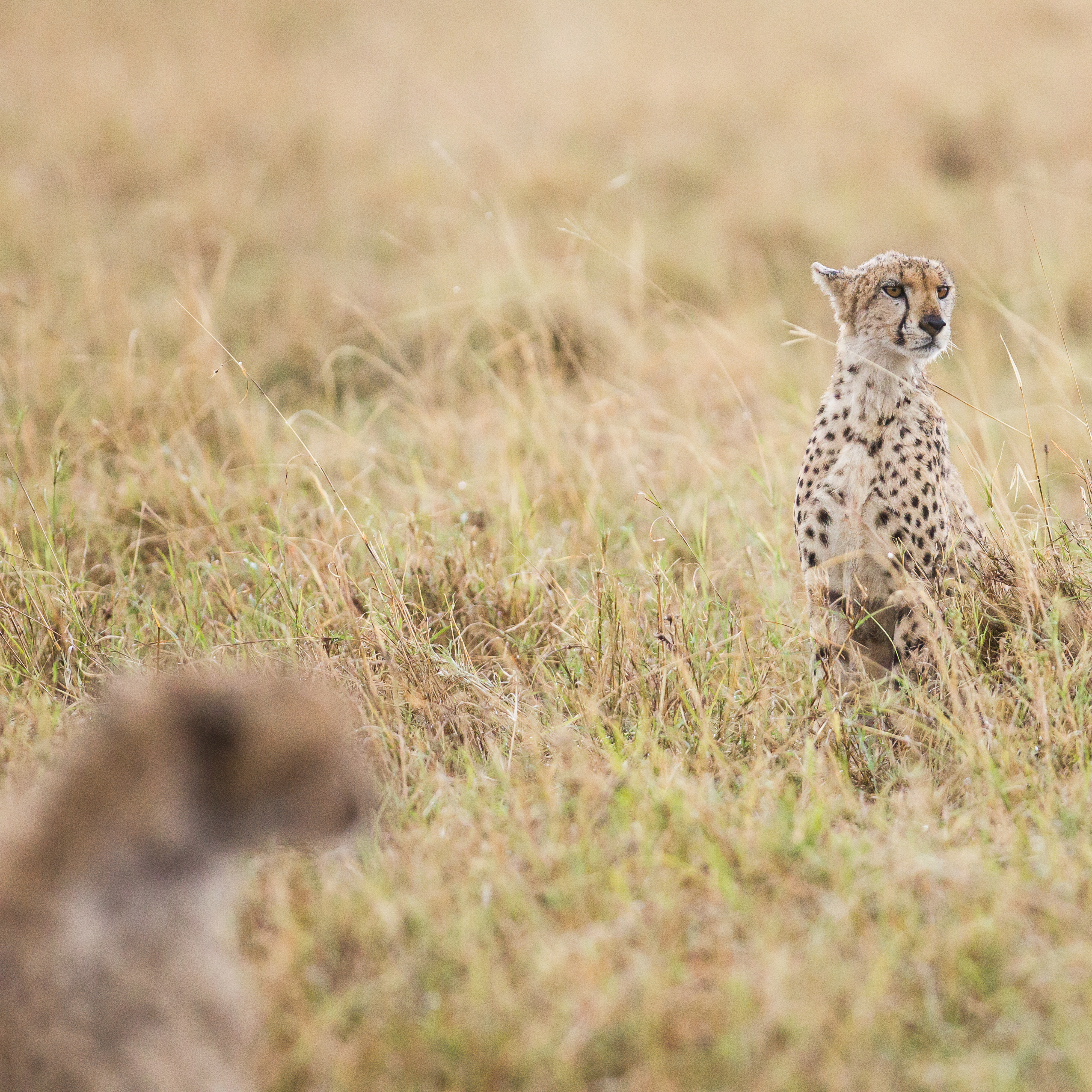
I ghepardi si giocano invece le loro possibilità in campo aperto e spesso in pieno giorno. Quando si alzano e cominciano a camminare verso le gazzelle, l’intera pianura sembra accorgersene. Le potenziali prede smettono di pascolare e osservano ogni loro movimento.
Due giovani tentano qualche incursione, provocando più confusione che paura. Gli gnu fanno fronte compatto e riescono perfino a metterli in fuga. Le gazzelle, invece, si disperdono a una velocità impressionante lasciando dietro di sé soltanto lunghe linee di polvere.
Poi interviene la madre.
Qualche falso attacco, improvvisi cambi di direzione, il branco che si apre e si ricompone. Finché un piccolo rimane isolato.
Questa volta la corsa ha un esito diverso.
Nella savana la distanza fra la vita e la morte può essere questione di pochi secondi.
Il leopardo appartiene invece al margine della boscaglia. È il più elusivo dei grandi felini e sembra possedere qualcosa della potenza del leone e qualcosa della velocità del ghepardo.
Lo cerchiamo per un intero pomeriggio senza risultato.
Poi, quando abbiamo ormai rinunciato e il sole è tramontato, appare.
Nella luce che scompare comincia improvvisamente a emettere dei versi. Non è un ruggito. Sembrano quasi colpi di tosse, brevi e ripetuti.
È un richiamo.
Dalla vegetazione emerge uno dei suoi due cuccioli, quello scampato all’attacco di una iena. Probabilmente era rimasto nascosto e immobile per ore. Durante la giornata avevamo controllato più volte quella stessa zona senza scorgerlo.
Rimaniamo lì mentre madre e cucciolo giocano.
Poco alla volta la luce scompare e la savana diventa indistinguibile dalla notte.
L’incontro più emozionante resta però quello con l’elefante.
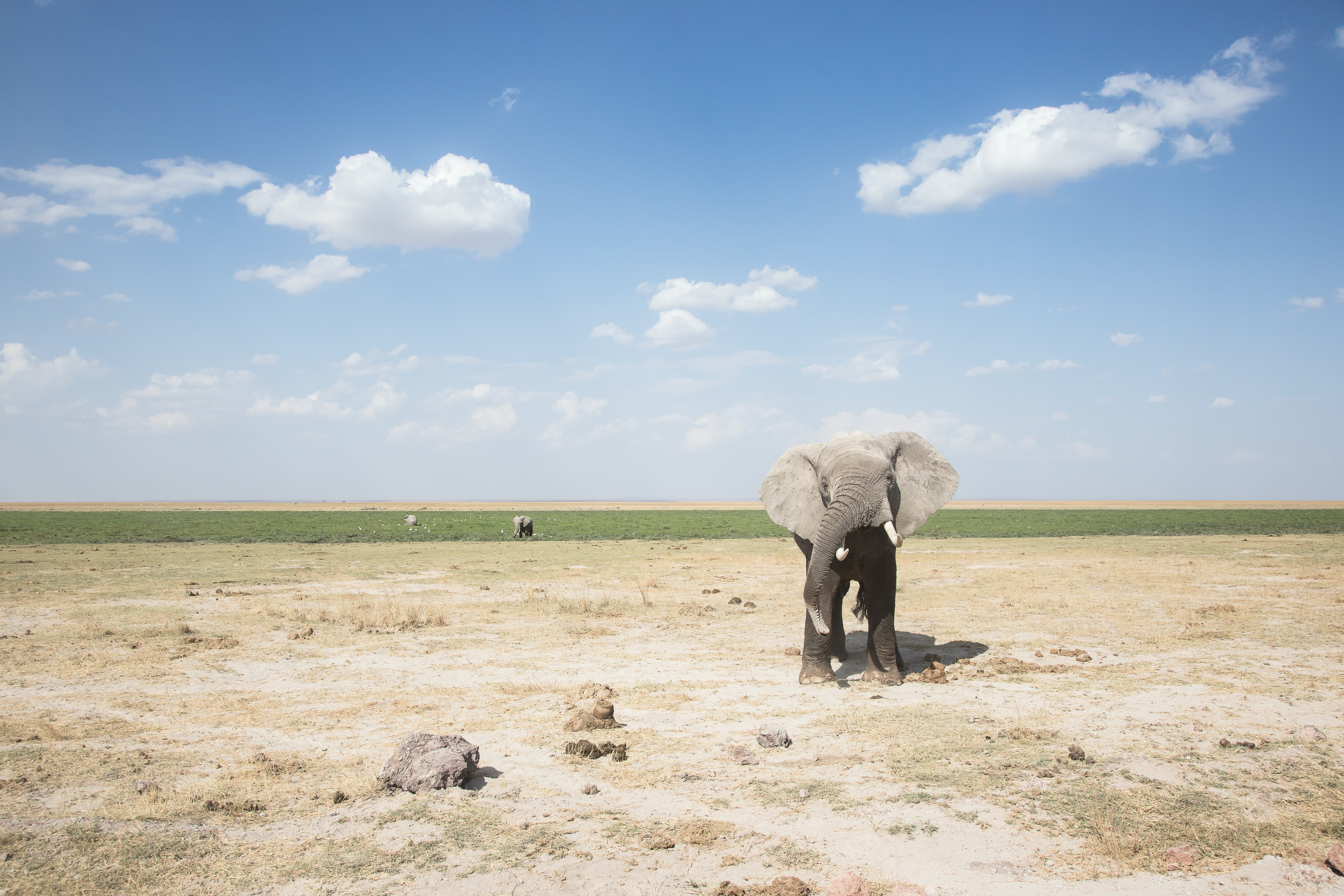
In Africa, uno dei luoghi nei quali la sua presenza diventa quasi continua è l’Amboseli, ai piedi del Kilimangiaro. Qui gli elefanti sono ovunque. In un ambiente in gran parte arido, le paludi esercitano un richiamo irresistibile e scandiscono i loro spostamenti: al mattino escono dalla boscaglia e si dirigono verso l’acqua; alla sera percorrono la stessa strada in senso contrario.
Lions spend much of the day lying motionless in the grass, waiting for the cover of darkness. The carcasses of wildebeest, invariably marked by gatherings of vultures and marabou storks, tell the story of what happens when the pride begins to hunt.
Cheetahs, on the other hand, must take their chances in the open, often in broad daylight. When they rise and begin walking towards the gazelles, the entire plain seems to notice. Their potential prey stop grazing and watch their every movement.
Two youngsters attempt a few incursions, causing more confusion than fear. The wildebeest close ranks and even manage to drive them away. The gazelles, meanwhile, scatter at astonishing speed, leaving behind nothing but long trails of dust.
Then their mother takes over.
A few feigned attacks, sudden changes of direction, the herd breaking apart and coming together again. Until one youngster becomes isolated.
This time, the chase ends differently.
On the savannah, the distance between life and death can be measured in seconds.
The leopard, by contrast, belongs to the edges of the woodland. It is the most elusive of the big cats, seeming to combine something of the lion's strength with something of the cheetah's speed.
We spend an entire afternoon searching for one, without success.
Then, just as we have given up and the sun has disappeared below the horizon, it appears.
In the fading light, it suddenly begins making a series of sounds. Not a roar. They sound almost like coughs, short and repeated.
It is calling.
From the vegetation emerges one of its two cubs, the one that survived an attack by a hyena. It had probably remained hidden and motionless for hours. During the day, we had searched that very area several times without catching even a glimpse of it.
We remain there as mother and cub begin to play.
Little by little, the light fades until the savannah becomes indistinguishable from the night.
Yet my most moving encounter remains the one with the elephant.
È una processione lenta che sembra non avere né un principio né una fine.
A volte i gruppi superano i quaranta individui. Li vedi immersi nelle paludi oppure molto lontani, mentre l’aria calda fa tremare le loro sagome all’orizzonte.
Davanti a quelle figure enormi che avanzano lentamente nella pianura è difficile non pensare a un’altra immagine, lontanissima nel tempo: quella dei nostri antenati davanti ai mammut.
Per qualche istante le distanze fra le epoche sembrano accorciarsi.
E la giraffa?
Per quanto possa sembrare strano, non è la sua altezza ciò che ricordo maggiormente. Quella è quasi scontata.
Io la associo al silenzio.
Ci si può trovare in mezzo a un grande gruppo di giraffe senza sentire praticamente nulla. È quasi come se non ci fossero. Anche i movimenti vengono compiuti con estrema lentezza, con una discrezione che sembra incompatibile con le dimensioni dell’animale.
Poi ci sono i bambini.
A volte li scorgiamo mentre giochiamo — loro fermi, noi dentro un’auto che attraversa velocemente una distesa di erba gialla cresciuta a stento sulla sabbia. Guardando intorno viene spontaneo chiedersi da dove siano arrivati: fino all’orizzonte non si vede una casa, una capanna, nulla.
Eppure sono lì.
Quando passiamo alzano una mano. Qualcuno corre per qualche metro accanto all’auto. Quasi sempre sorridono.
Sono partito per l’Africa portando con me migliaia di immagini già viste. Documentari, fotografie, libri. Credevo, in qualche modo, di sapere che cosa avrei trovato.
Poi sono arrivati gli gnu che riempivano l’orizzonte, una zebra che ha deciso di tornare indietro, il richiamo di un leopardo nella sera, gli elefanti tremolanti nell’aria calda dell’Amboseli, il silenzio delle giraffe.
E infine una mano alzata sul ciglio di una pista.
Dall’oblò dell’aereo la savana mi era apparsa ancora come un’immagine.
Adesso so che l’Africa comincia esattamente dove finiscono le immagini.
Un racconto visivo dai grandi ecosistemi del Kenya.
Un racconto visivo dai grandi ecosistemi del Kenya.
Un racconto visivo dai grandi ecosistemi del Kenya.
In Africa, one of the places where its presence becomes almost constant is Amboseli, at the foot of Mount Kilimanjaro. Here, elephants seem to be everywhere. In an otherwise largely arid environment, the swamps exert an irresistible attraction and determine the rhythm of their movements: in the morning, they emerge from the woodland and head towards the water; in the evening, they retrace their steps.
It is a slow procession that seems to have neither beginning nor end.
Sometimes the groups number more than forty individuals. You see them immersed in the swamps or far away in the distance, their silhouettes shimmering in the heat rising from the plains.
Looking at those enormous figures moving slowly across the landscape, it is difficult not to think of another image, infinitely distant in time: that of our ancestors standing before mammoths.
For a moment, the distances between different ages seem to diminish.
And what about the giraffe?
Strange as it may seem, its height is not what I remember most vividly. That is almost too obvious.
I associate it with silence.
You can find yourself surrounded by a large group of giraffes without hearing virtually a sound. It is almost as though they were not there. Even their movements are performed with extraordinary slowness, with a discretion that seems incompatible with the animal's size.
And then there are the children.
Sometimes we catch sight of them playing — they are standing still, while we are travelling in a vehicle across an expanse of yellow grass struggling to grow in the sandy soil. Looking around, you cannot help wondering where they have come from: as far as the horizon, there is not a house, not a hut, nothing.
And yet, there they are.
As we pass, they raise a hand. Some run alongside the vehicle for a few metres. Almost always, they smile.
I set off for Africa carrying thousands of images already stored in my memory. Documentaries, photographs, books. I thought that, in some way, I knew what I was going to find.
Then came the wildebeest filling the horizon, a zebra that decided to turn back, the call of a leopard in the evening, elephants shimmering in the hot air of Amboseli, the silence of the giraffes.
And finally, a hand raised beside a dusty track.
From the airplane window, the savannah had still appeared to me as an image.
Now I know that Africa begins precisely where images end.**