TETRAONIDI DI MONTAGNA
È ormai buio. Con l’ausilio della lampada frontale mi addentro nel silenzio della taiga svedese. A metà aprile la neve comincia a sciogliersi, liberando dall’oppressione del suo peso i cespugli di erica e gli spugnosi tappeti di muschio. Finalmente l’inverno passa la mano e il respiro della primavera sparge prodigiosamente sul bosco tutti i colori del verde.
La neve rimasta, resa compatta dal gelo delle notti boreali, rende il cammino meno faticoso.
Raggiunto il punto prescelto, monto la tenda e mi preparo a trascorrere la notte nella foresta. Alle 22, puntuali come un orologio, i galli cedroni raggiungono i loro posatoi. Non li vedo, ma sento sopra la mia testa il poderoso battito delle ali. Arrivano sempre alla stessa ora e sostano sugli alberi, in attesa del giorno successivo.
Mi sveglio che è ancora buio. Apro la cerniera della tenda di pochi centimetri, quel tanto che basta per scorgere due maschi in piena attività a pochi metri dalla mia postazione.
Sono lo spettatore privilegiato di un rito il cui fascino mi ha attirato fin qui, nel nord della Svezia, a migliaia di chilometri da casa.
Ogni mattina, alle prime luci dell’alba, negli angoli più remoti del bosco un gruppo di galli cedroni si dà un tacito appuntamento.
Darkness has already fallen. With the aid of my headlamp, I venture into the silence of the Swedish taiga. By mid-April, the snow is beginning to melt, releasing the heather bushes and spongy carpets of moss from the weight that has oppressed them throughout the winter. At last, winter relinquishes its hold, and the breath of spring miraculously spreads every shade of green across the forest.
The remaining snow, hardened by the frost of the northern nights, makes walking less tiring.
Having reached my chosen spot, I pitch my tent and prepare to spend the night in the forest. At ten o'clock, as punctual as clockwork, the western capercaillies arrive at their roosts. I cannot see them, but I can hear the powerful beating of their wings above my head. They always arrive at the same hour and settle in the trees, waiting for the following day.
I wake while it is still dark. I open the tent's zipper just a few centimetres, barely enough to make out two males displaying vigorously only a few metres from my position.
I am a privileged spectator of a ritual whose fascination has drawn me all the way here, to northern Sweden, thousands of kilometres from home.
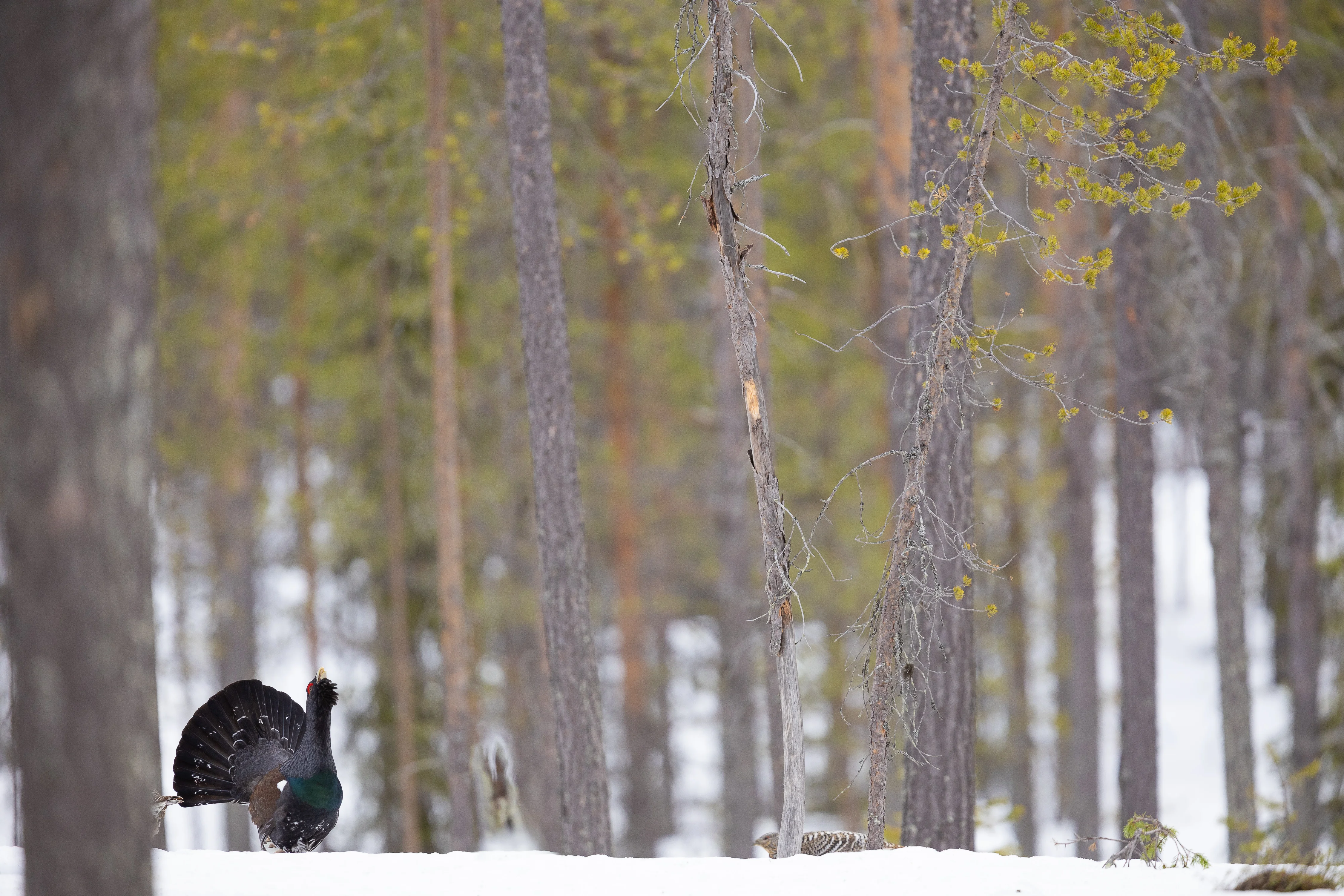
Il luogo è sempre lo stesso e il copione si ripete immutabile dall’ultima glaciazione. È un rituale segreto, capace di evocare e rinnovare i miti e le leggende della montagna.
I maschi si muovono veloci nelle tenebre e nel silenzio della foresta, contendendosi il diritto di perpetuarsi in una discendenza oggi sempre più incerta. Con il passare dei minuti, il chiarore dell’alba rende la scena più decifrabile e finalmente riesco a distinguere un maschio in parata, intento a recitare instancabilmente sempre la stessa strofa. Il suo canto termina con un suono curioso, simile a quello prodotto dal tappo di una bottiglia di spumante quando viene estratto. Lo stesso richiamo risuona in diversi punti del lek: questa mattina sono tre i maschi che si contendono la scena.
Gran parte della parata si svolge dentro una luce fioca. Al fotografo rimangono generalmente non più di quarantacinque minuti di luce accettabile durante i quali sperare che la scena giusta si svolga proprio davanti alla sua postazione.
Serve fortuna. Molta fortuna.
Quasi sempre l’occasione migliore arriva quando la luce è ancora troppo scarsa oppure quando gli animali si trovano lontani, nascosti dalla vegetazione. Ed è proprio quello che accade questa mattina.
Every morning, at the first light of dawn, a group of capercaillies gathers by some unspoken agreement in the remotest corners of the forest. The meeting place is always the same, and the performance has been repeated unchanged since the last Ice Age. It is a secret ritual, capable of evoking and renewing the myths and legends of the mountains.
The males move swiftly through the darkness and silence of the forest, competing for the right to perpetuate their lineage, a future that today seems increasingly uncertain. As the minutes pass, the growing light of dawn gradually reveals the scene, and at last I can distinguish a displaying male, tirelessly repeating the same refrain. His song ends with a curious sound, rather like the pop of a cork being pulled from a bottle of sparkling wine. The same call echoes from different parts of the lek: this morning, three males are competing for the stage.
Most of the display takes place in very dim light. A photographer generally has no more than forty-five minutes of acceptable light in which to hope that the right scene will unfold directly in front of his hide.
It takes luck. A great deal of luck.
Poco distante esplode improvvisamente un incredibile frastuono: due urogalli stanno combattendo. Li sento chiaramente, ma non riesco a vedere nulla. La posizione non è favorevole e non intendo sporgermi dalla tenda rischiando di disturbarli.
Poi, altrettanto improvvisamente, il bosco si riappropria del suo silenzio.
Attendo ancora qualche minuto, ma la prima sensazione è quella giusta: i contendenti sono volati via. Domani, però, c’è da esserne certi, torneranno a prendere possesso dei loro territori e il sipario alzerà nuovamente sulla stessa, antichissima rappresentazione.
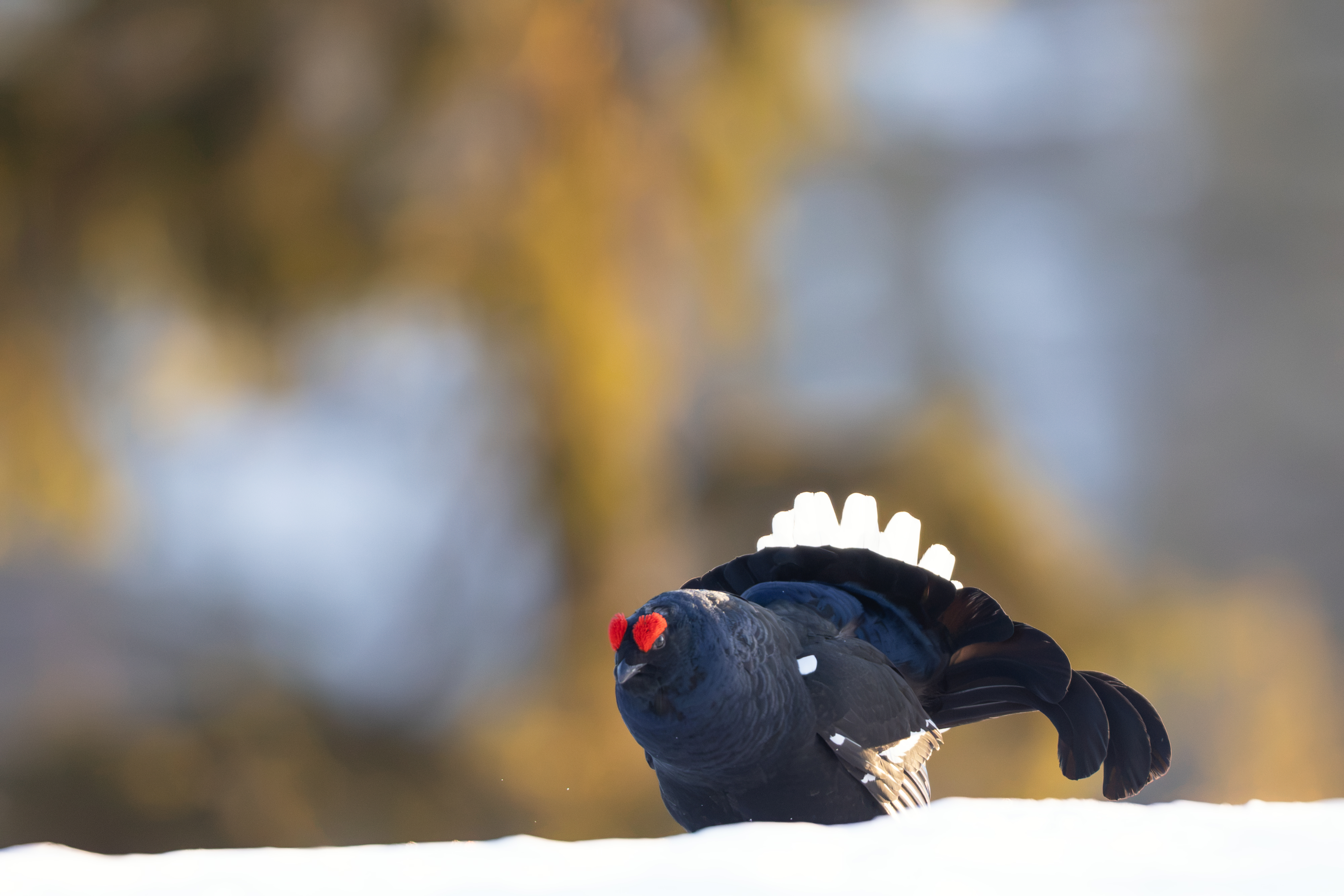
Dei sei giorni trascorsi in Svezia ne dedico quattro al gallo cedrone e due al gallo forcello. Passare dall’uno all’altro significa però cambiare completamente scenario.
Se il mondo del cedrone appartiene alla penombra e al silenzio della foresta, quello del forcello è aperto, rumoroso, quasi frenetico.
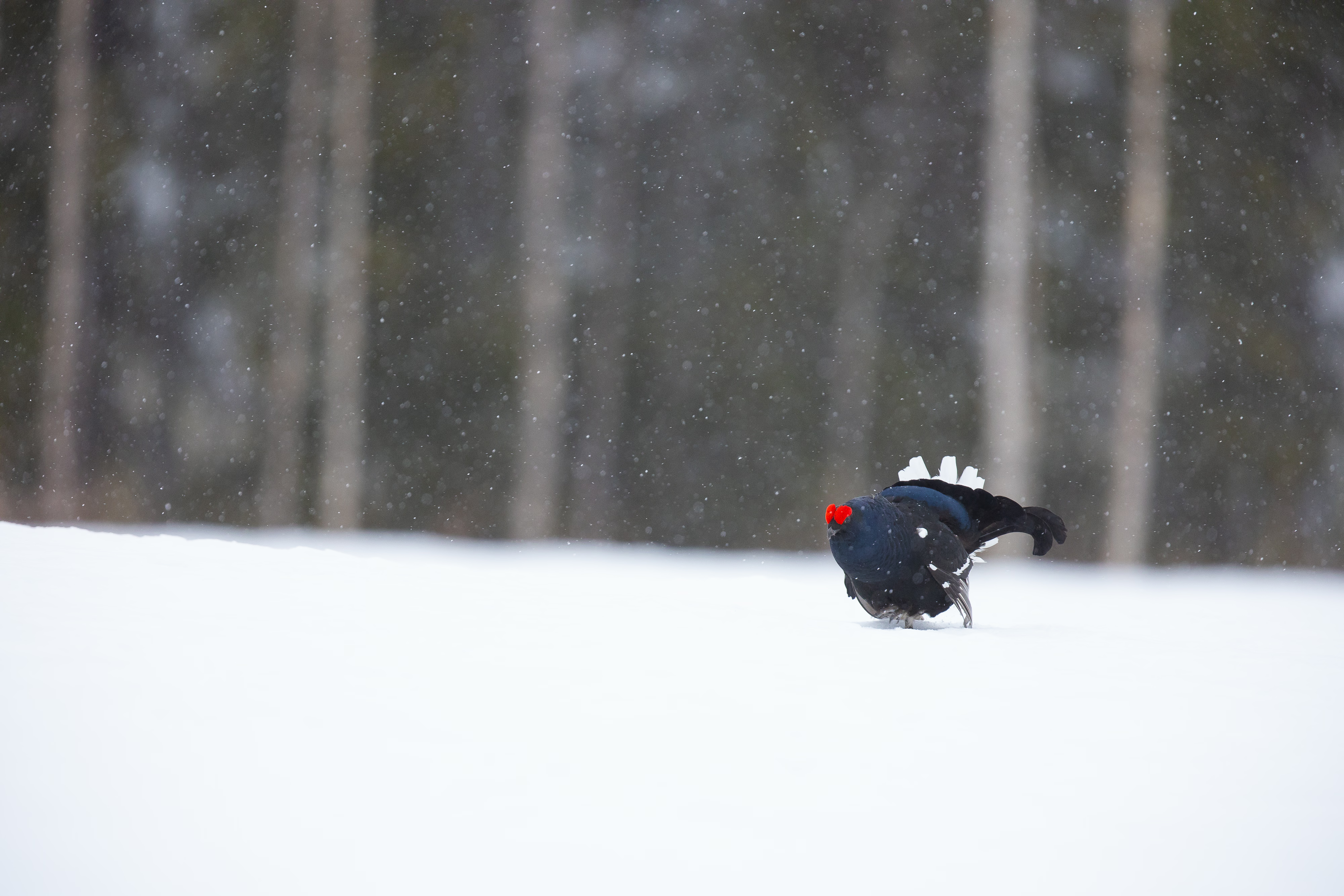
Le arene dei galli forcelli sono generalmente situate in spazi aperti; persino la superficie ghiacciata dei laghi può trasformarsi in un lek. I problemi legati alla scarsità di luce sono quindi molto meno importanti e, soprattutto, il numero degli animali presenti può essere enormemente superiore.
Nell’arena che frequento si radunano mediamente una quarantina di maschi.
Almost invariably, the best opportunity comes when the light is still too poor, or when the birds are too far away, concealed by the vegetation. And that is precisely what happens this morning. Suddenly, an extraordinary commotion erupts a short distance away: two capercaillies are fighting. I can hear them clearly, but I cannot see a thing. My position is unfavourable, and I have no intention of leaning out of the tent and risking disturbing them.
Then, just as suddenly, the forest reclaims its silence.
I wait a few more minutes, but my first impression proves correct: the rivals have flown away. Tomorrow, however, there can be little doubt that they will return to reclaim their territories, and the curtain will rise once again on the same ancient performance.
Of the six days I spend in Sweden, I devote four to the capercaillie and two to the black grouse. Moving from one species to the other, however, means entering an entirely different world.
If the capercaillie's world belongs to the half-light and silence of the forest, that of the black grouse is open, noisy, almost frenetic.
Black grouse display grounds are generally situated in open areas; even the frozen surfaces of lakes can become leks. The difficulties caused by poor light are therefore far less significant and, above all, the number of birds present can be enormously greater.
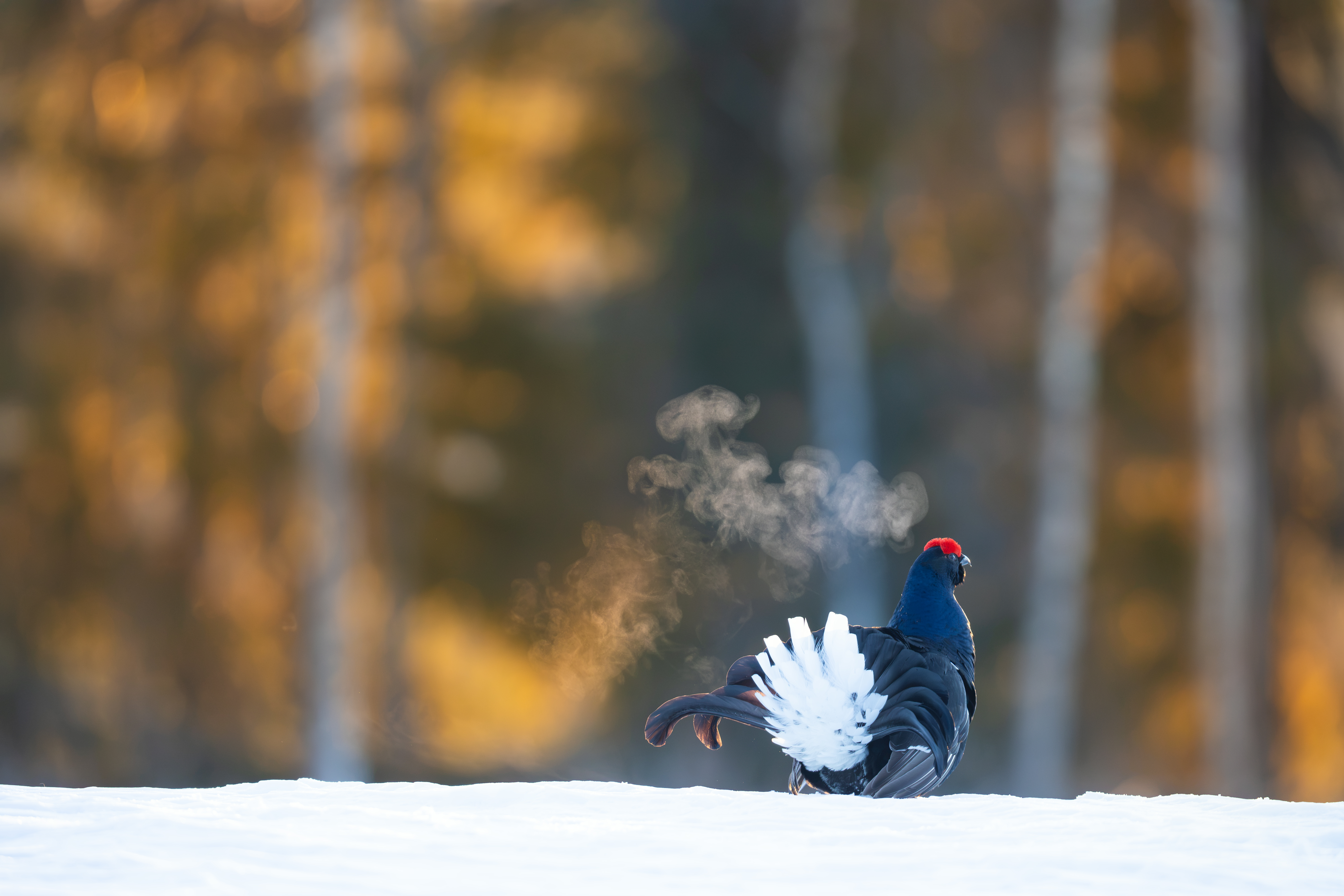
Anche le loro abitudini sono differenti. I galli forcelli arrivano nel lek già nel pomeriggio, quando la luce ancora forte e radente concede ottime opportunità fotografiche. Al calare della notte si allontanano, per tornare fra l’una e le due. Non esiste alcun rischio di dormire troppo: il richiamo di quaranta maschi in amore è letteralmente assordante.
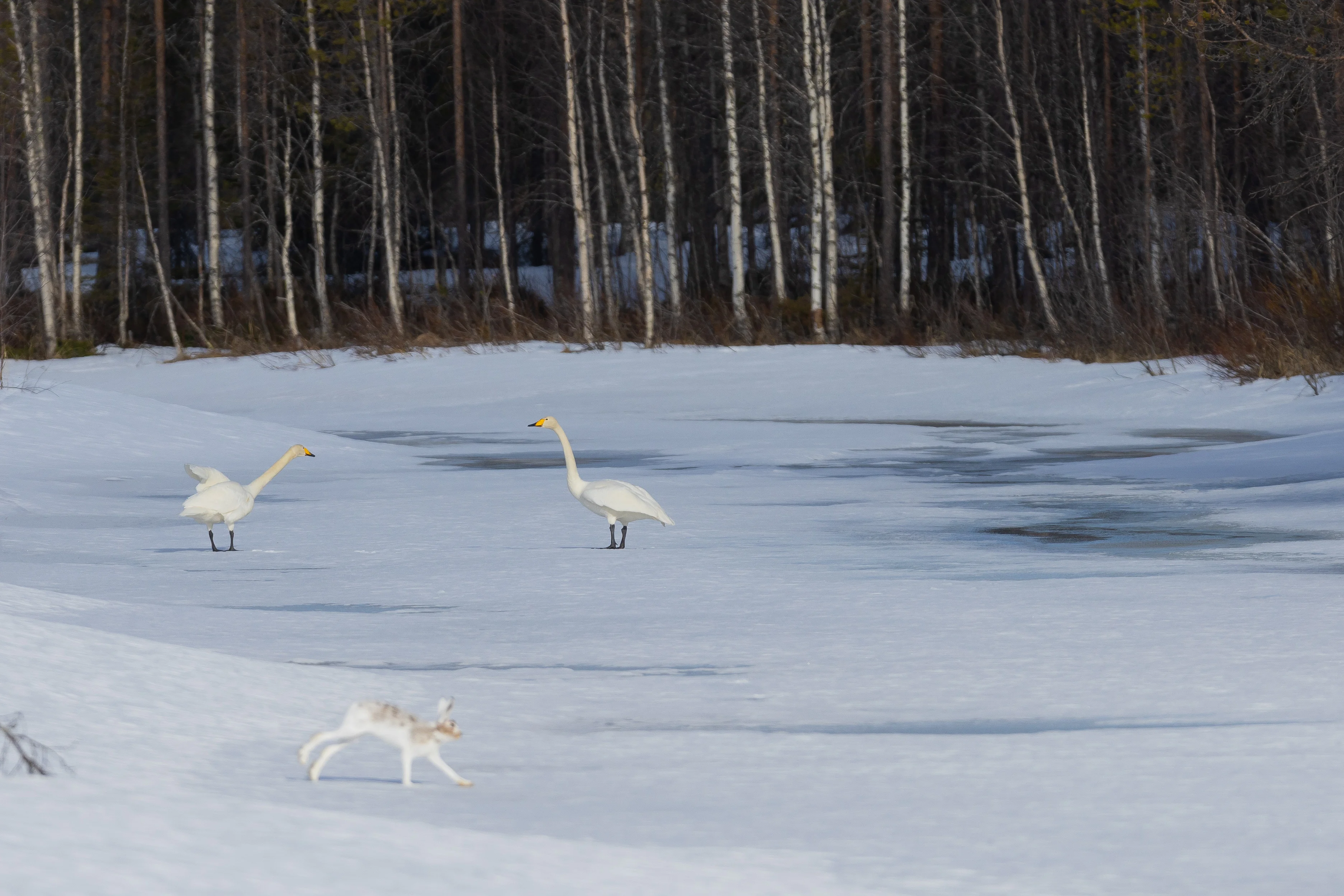
Durante le due giornate trascorse nel lek assisto anche al passaggio di volpi, gru e alci. Ma sono soprattutto i rapporti tra i singoli maschi ad attirare la mia attenzione. Ognuno difende strenuamente una minuscola porzione di territorio e, nonostante il poco tempo a disposizione, comincio presto a riconoscere alcuni individui.
Davanti alla mia tenda staziona sempre lo stesso maschio. È impossibile confonderlo: porta sulla testa una profonda cicatrice.
Lo ritrovo puntualmente nello stesso punto e, nei giorni successivi, lo riconosco anche nelle fotografie realizzate dai miei compagni d’avventura. Molti cercano di spodestarlo. Nessuno ci riesce.
Le zone più interne dell’arena sono infatti le più ambite e vengono generalmente occupate dagli individui più vigorosi, quelli che, attraverso la conquista e la difesa del territorio, offrono alle femmine un segnale della propria qualità.
At the lek I visit, an average of around forty males gather.
Their habits are different, too. Black grouse arrive at the lek as early as the afternoon, when the strong, low-angled sunlight offers excellent photographic opportunities. As night falls, they move away, returning between one and two in the morning. There is no danger of oversleeping: the calls of forty courting males are literally deafening.
During the two days I spend at the lek, I also witness foxes, cranes and moose passing through. But it is above all the relationships between the individual males that capture my attention. Each fiercely defends a tiny patch of territory and, despite the limited time available, I soon begin to recognise certain individuals.
The same male is always stationed in front of my tent. He is impossible to mistake: a deep scar marks his head.
I find him in exactly the same place each time and, in the following days, I recognise him again in photographs taken by my fellow travellers. Many attempt to displace him. None succeeds.
The innermost areas of the lek are, in fact, the most coveted and are generally occupied by the strongest individuals, those whose ability to conquer and defend a territory provides females with a signal of their quality.
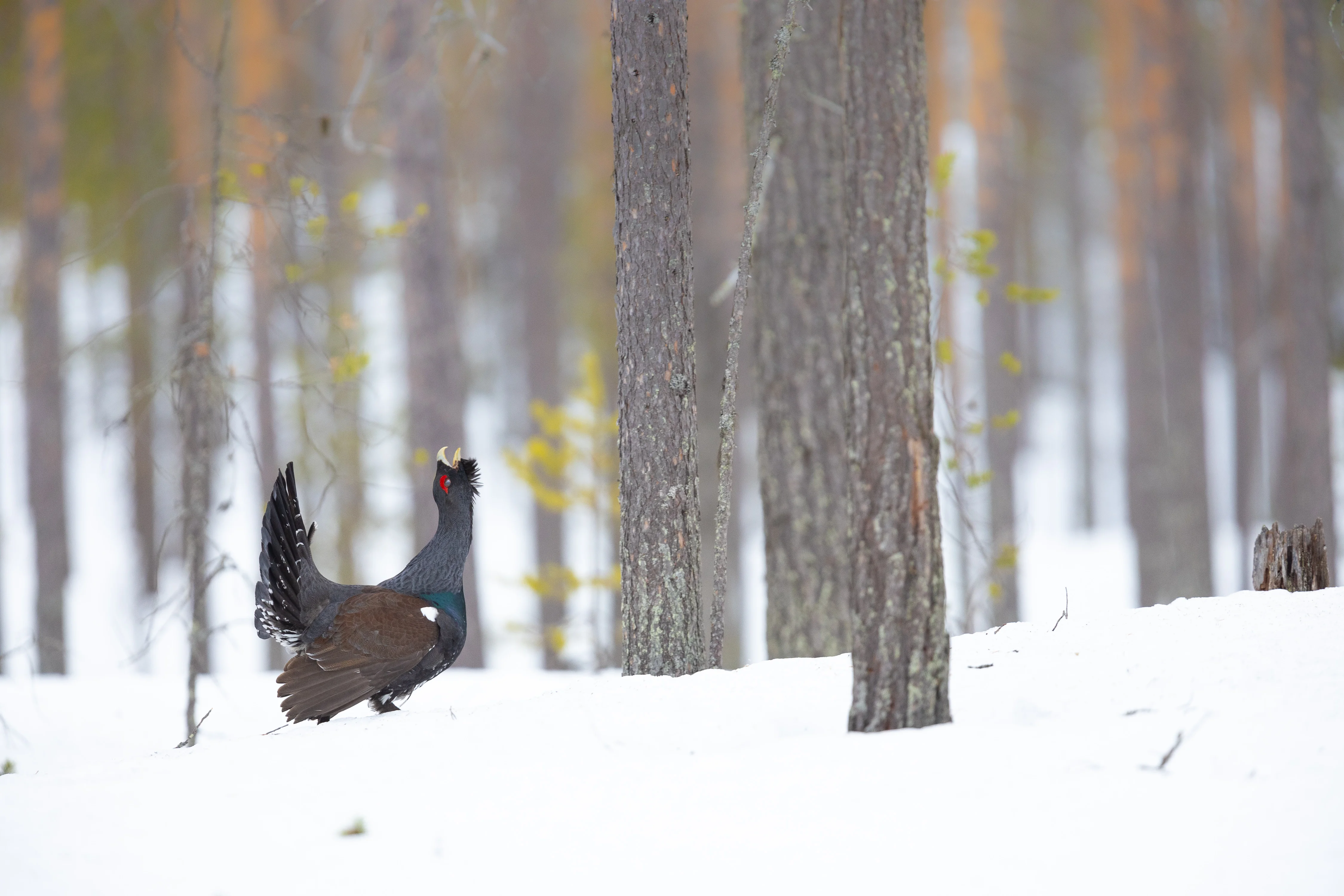
Anche nei confronti della presenza umana il comportamento del forcello appare molto diverso da quello del cedrone. È assai più tollerante nei confronti dei piccoli movimenti del fotografo: ci si può sporgere dal capanno senza provocare particolari reazioni. A volte, anzi, il problema sembra essere quello opposto: qualche individuo si avvicina tanto da far pensare che possa entrare direttamente nel capanno.
Fotografare questi splendidi tetraonidi mi ha permesso di conoscere due volti profondamente diversi della primavera boreale: il silenzio quasi solenne del cedrone nella penombra della foresta e il tumulto dei forcelli nelle grandi arene aperte.
Ma soprattutto mi ha permesso di respirare le albe ovattate della taiga ancora imbiancata, di osservare la natura assecondandone i ritmi e di attendere l’occasione giusta senza sapere se sarebbe mai arrivata.
In fondo era proprio ciò che cercavo.
Non soltanto tornare a casa con delle fotografie, ma trascorrere qualche giorno accettando tempi che non ero io a stabilire. Entrare nel bosco quando era ancora notte, aspettare in silenzio e lasciare che fosse la foresta, ogni mattina, a decidere il copione.
The black grouse also behaves very differently from the capercaillie in the presence of humans. It is far more tolerant of a photographer's small movements: one can lean out of the hide without provoking any particular reaction. Sometimes, indeed, the problem seems to be quite the opposite: certain individuals approach so closely that I begin to wonder whether they might actually enter the hide.
Photographing these magnificent grouse has allowed me to discover two profoundly different faces of the boreal spring: the almost solemn silence of the capercaillie in the forest's half-light, and the tumult of the black grouse in their great open arenas.
But above all, it has allowed me to breathe in the hushed dawns of the still snow-covered taiga, to observe nature while respecting its rhythms, and to wait for the right opportunity without knowing whether it would ever come.
After all, that was precisely what I had come looking for.
Not simply to return home with photographs, but to spend a few days accepting a rhythm that was not mine to dictate. To enter the forest while it was still night, to wait in silence, and to let the forest itself decide, each morning, how the story would unfold.